
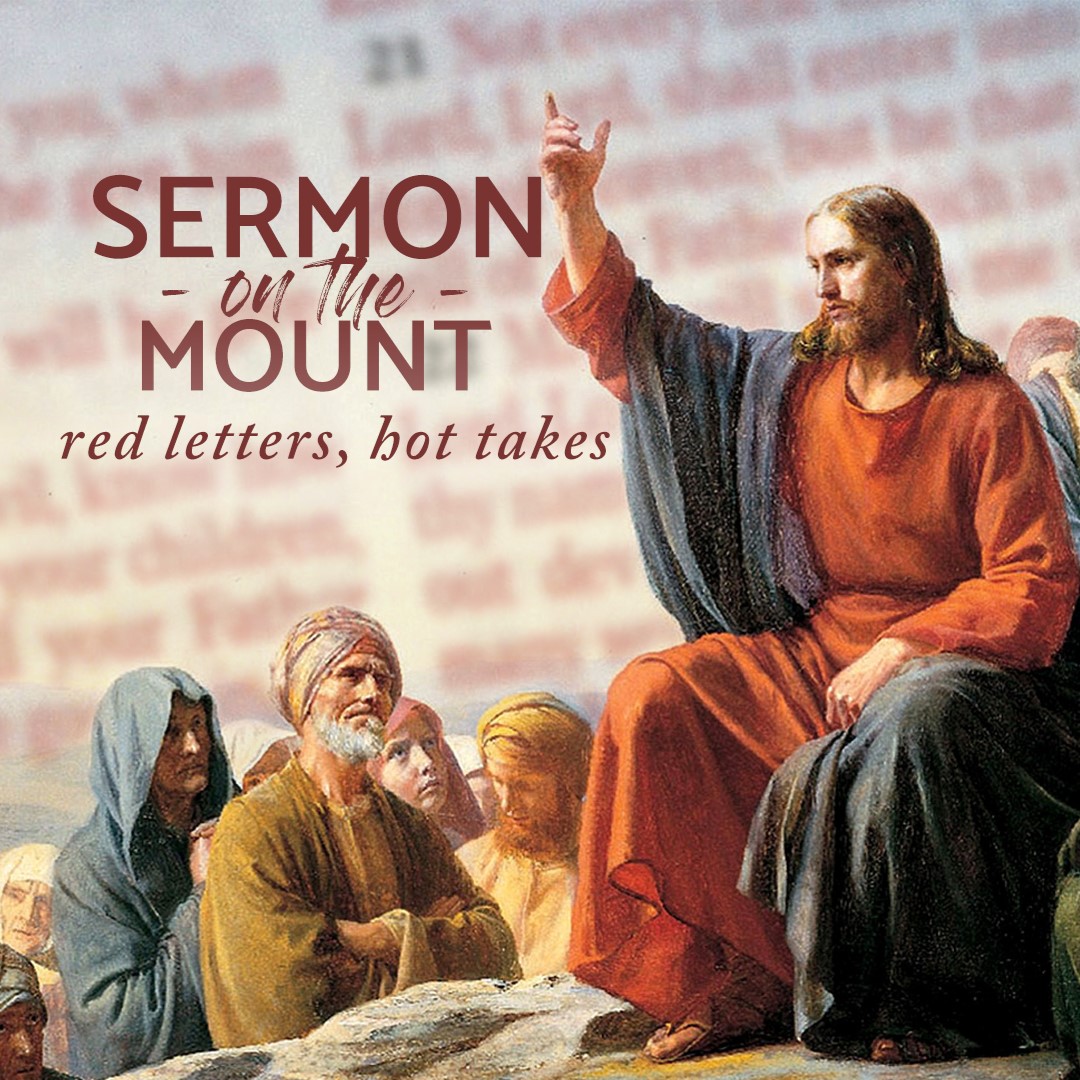
November 9, 2025
Matthew 6:5-15
“Pray This Way”
Service Overview: Prayer is not about impressing others; it’s about connecting with our heavenly Father. Jesus critiques performative religion and gives a prayer that reshapes our priorities: God’s glory, daily needs, forgiveness, and deliverance. In this model prayer, Jesus teaches us that authentic, kingdom-rooted prayer flows from humility, trust, and relationship, not religious display.
Memory Verse for the Week:
Philippians 4:6 – Do not be anxious about anything, but in every situation, by prayer and petition, with thanksgiving, present your requests to God.
Background & Technical Insights:
- Prayer in the non-Jewish world was often characterized particularly by formal invocations and magical incantations, in which the correct repetition counted rather than the worshipper’s attitude or intention. (R. T. France, The Gospel According to Matthew, 134)
- Ancient rabbis maintained that the longer the prayer, the more likely it would be heard and heeded by God. Verbosity was confused with meaning, and length was confused with sincerity. (John MacArthur, Matthew 1-28, 420)
- In synagogue services public prayer was customarily led by a male member of the congregation who stood in front of the ark of the law and discharged this responsibility. A man could easily succumb to the temptation of praying up to the audience/congregation. The acceptable clichés, the appropriate sentiments, the sonorous tones, the well-pitched fervency, all become tools to win approval, and perhaps to compete with the chap who led in prayer last week. (D.A. Carson, The Sermon on the Mount, 60)
- Jewish scholars were debating the use of fixed prayers in this period; they generally held them to be acceptable if one’s intent was genuine. Greek prayers sometimes piled up as many titles of the deity addressed as possible, hoping to secure his or her attention. Pagan prayers typically reminded the deity of favors done or sacrifices offered, attempting to get a response from the god on contractual grounds. (Craig S. Keener, The IVP Bible Background Commentary: New Testament, 75)
- The Greek “Father” (pater) probably translates the Aramaic Abba (cf. Mark 14:36). Use of this intimate term for God (almost equivalent to the English “Daddy”) was virtually unparalleled in first-century Judaism. Christians should consider God as accessible as the most loving human parent. (Craig L. Blomberg, Matthew, 123)
- Because this great prayer has been called the Lord’s Prayer for almost 2,000 years, it would be futile to attempt to change its name, though the best title would be “the Disciples’ Prayer” because that is what it really is. At the disciples’ request (Luke 11:1), Jesus provided it for them as a pattern for prayer. (R. Kent Hughes, The Sermon on the Mount, 157)
What are Jesus’ hot takes on genuine prayer?
- Genuine prayer pursues God’s presence, not people’s praise.
(vv. 5–8 cf. Ps 145:18; Jer 29:13; Luke 18:9-14; John 4:23-24; Heb 10:22; Jas 4:8; Rev 3:20)
Jesus was not condemning public prayer. He was condemning the desire to be seen praying publicly… Jesus was emphasizing that prayer is essentially a conversation between the believer and God. It is intrinsically private, not exhibitionist. (R. Kent Hughes, The Sermon on the Mount, 153)
Jesus wants to teach us that praying, to be a genuine act of righteousness, must be without ostentation, directed to the Father and not to men, primarily private, and devoid of the delusion that God can be manipulated by empty garrulity. (D.A. Carson, The Sermon on the Mount, 63)
To pray rightly is to pray with a devout heart and with pure motives. It is to pray with single attention to God rather than to other men. And it is to pray with sincere confidence that our heavenly Father both hears and answers every request made to Him in faith. (John MacArthur, Matthew 1-28, 427)
- Genuine prayer aligns with God’s purposes, not personal preferences.
(vv. 9–10 cf. Ps 115:1; Prov 3:5-6; Isa 55:8-9; Matt 26:39; Eph 3:20-21; 1 John 5:14)
Prayer is not a spiritual crowbar or jackhammer that pries open God’s willingness to act but a means by which Christians open themselves up to God – to grasp God’s will and be grasped by it. (David Garland, Luke, 473)
For us as sinful men and women, prayer is not designed to align God with our will, but to align our will with God. Prayer is not to make God more like us but to make us more like God. It should firm up the muscles of our faith. (Steve Swartz, Strength in the River, 50)
Though God is our Father, he is also transcendent and sovereign. He is both our Father and our King and is to be approached intimately, but with deepest awe and respect. (R. Kent Hughes, The Sermon on the Mount, 166)
- Genuine prayer depends daily on the Father’s provision and pardon.
(vv. 11–15 cf. Ex 16:4; Ps 32:1-5; Lam 3:22-23; Luke 11:3-4; Heb 4:16; 1 John 1:9)
We do not pray to inform God of our wants. Omniscient as he is, he cannot be informed of any thing which he knew not before: and he is always willing to relieve them. The chief thing wanting is, a fit disposition on our part to receive his grace and blessing. Consequently, one great office of prayer is, to produce such a disposition in us: to exercise our dependence on God; to increase our desire of the things we ask for; to us so sensible of our wants, that we may never cease wrestling till we have prevailed for the blessing. (John Wesley, Wesley’s Notes on the Bible, 20)
Conclusion: How should Jesus’ teaching about genuine prayer shape the way we pray?
- Pray to encounter the Father, not to impress anyone.
(Ps 27:4; 42:1-2; 62:8; Matt 11:28-29; John 14:6; Heb 10:22; Jas 4:8; Rev 3:20)
Public prayer is very appropriate when practiced with right motives. But public orations should represent the overflow of a vibrant personal prayer life. (Craig L. Blomberg, Matthew, 121)
The purpose of prayer is not for the disciple to bring information to God; the purpose of prayer is for the disciple to experience intimacy with God. (David Platt, Follow Me, 112)
Public prayer will never make up for closet communion. (George Muller, The Autobiography of George Muller, 47)
- Pray to align with God’s story, not to make Him a supporting character in yours.
(Ps 37:4; Prov 19:21; Isa 55:8-9; Luke 22:42; John 15:7; Rom 8:28-29; 14:8; Col 3:1-3)
Submitting to anyone’s will is foreign to us. Whether or not that has been our experience, Jesus’ words apply to us! Jesus tells us here that the ideal prayer should contain a section in which we bow before God saying, “Let your will be done in my life, in this situation, at this time, just as it is in heaven itself.” Do we truly pray this? (R. Kent Hughes, The Sermon on the Mount, 180)
Prayer is not attempting to get our will done in heaven but His will done on earth. (Bill Thrasher, A Journey to Victorious Praying, 171)
Prayer that focuses on self is always hypocritical, because, by definition, the focus of every prayer should be on God. (John MacArthur, Matthew 1-28, 420)
- Pray from a place of dependence, not control.
(Ps 121:1-2; Prov 3:5-6; Matt 18:3-4; John 15:5; 2 Cor 12:9-10; Phil 4:11-13; 1 Pet 5:6-7)
Genuine faith grows out of a relationship with God and cannot be simulated by formulas, no matter how invested our culture becomes in instant products, academic cramming and slothful shortcuts to prosperity. (Craig S. Keener, Matthew, 130)
Helplessness united with faith produces prayer, for without faith there can be no prayer. (Ole Hallesby, Reformation and Revival Journal, v. 13, n. 3, p. 53)
We are here taught to acknowledge our entire dependence on God for the supply of our daily necessities. As Israel required daily manna, so we require daily “bread.” We confess that we are poor, weak wanton creatures, and beseech Him who is our Maker to take care of us. (J. C. Ryle, Expository Thoughts on Matthew, 36)
Gospel Connection:
The One who taught us to call God ‘Father’ gave His life so we could truly be His children.
(John 1:12; 14:6; Rom 5:8-10; 8:15-17; 2 Cor 5:18-21; Gal 4:4-6; Eph 2:13-18; Col 1:20-22; Heb 10:19-22; 1 Pet 3:18)
The more deep-seated our sense of God’s Fatherhood, the deeper will be our sense of forgiveness — the wholeness that comes from being loved and being forgiven. (R. Kent Hughes, The Sermon on the Mount, 161)
Spiritual Challenge Questions…
Reflect on these questions in your time with the Lord this week, or discuss with a Christian family member or Life Group.
- What stands out to you about the way Jesus contrasts “hypocritical prayer” with “genuine prayer”?
- The Lord’s Prayer begins with “Our Father in heaven, hallowed be Your name.” How does (or should) starting with worship and reverence shape the rest of your prayers?
- What does it mean to align your prayers with God’s story rather than fit Him into yours? Where do you find yourself most tempted to script your own version of the story?
- Why do you think Jesus ties forgiveness so closely to prayer?
- How does viewing God as Father (not just Lord or Judge) change the way you approach Him in prayer? What images or feelings come to mind when you think of God as your Father?
- What does it mean to pray simply, sincerely, and confidently — trusting that “your Father knows what you need before you ask Him”?
HFM @ Home …
Discipleship resources from the Free Methodist and Heidelberg Catechisms, offering historic, Scripture-based teaching to help us grow in our shared faith.
The Heidelberg Catechism
Q12. According to God’s righteous judgment we deserve punishment both now and in eternity: how then can we escape this punishment and return to God’s favor?
- God requires that his justice be satisfied.1 Therefore the claims of this justice must be paid in full, either by ourselves or by another.2 (1 Ex. 23:7; Rom. 2:1-11. 2 Isa. 53:11; Rom. 8:3-4)
Q13. Can we make this payment ourselves?
- Certainly not. Actually, we increase our debt every day.1 (1 Matt. 6:12; Rom. 2:4-5)
Q14. Can another creature—any at all—pay this debt for us?
- No. To begin with, God will not punish any other creature for what a human is guilty of.1 Furthermore, no mere creature can bear the weight of God’s eternal wrath against sin and deliver others from it.2 (1 Ezek. 18:4, 20; Heb. 2:14-18. 2 Ps. 49:7-9; 130:3)
Q15. What kind of mediator and deliverer should we look for then?
- One who is a true1 and righteous2 human, yet more powerful than all creatures, that is, one who is also true God.3 (1 Rom. 1:3; 1 Cor. 15:21; Heb. 2:17. 2 Isa. 53:9; 2 Cor. 5:21; Heb. 7:26. 3 Isa. 7:14; 9:6; Jer. 23:6; John 1:1)
THE FIRST AFFIRMATION (Of the Creed continued from last week): GOD THE FATHER ALMIGHTY
The Maker of Heaven and Earth
In the beginning God created the heavens and the earth.48 All things that exist do so because God, for His good pleasure, brought them into existence.49 God spoke and they were; God created them out of nothing.50 Thus, God created all things, whether:
- having life or without life
- seen and natural or unseen and supernatural such as angels.51
48 Genesis 1:1: Psalms 148:5-6; Acts 4:24; 49 Job 38:4-11; Psalms 104:24: Isaiah 40:26: Jeremiah 10:12. Malachi 2:10; Acts 17:24; 50 Colossians 1:16; 51 Genesis 1:3-25: Romans 4:17; Hebrews 11:3