
September 7, 2025
Matthew 5:1–12
“Backward” Blessings
Service Overview: Jesus opens the Sermon on the Mount with a radical list of blessings that flip the world’s values upside down. In these “beatitudes,” we discover who is truly blessed in God’s kingdom, and it’s not who we’d expect. These words challenge our assumptions and invite us into a radically different understanding of life and what it means to be truly blessed.
Memory Verse for the Week:
James 1:12 – Blessed is the one who perseveres under trial because, having stood the test, that person will receive the crown of life that the Lord has promised to those who love him.
Background & Technical Insights:
- The first block of teaching in Matthew is the Sermon on the Mount (cc. 5-7). No piece of ethical literature has been more influential in the course of history. (William E. McCumber, Beacon Bible Expositions, Matthew, 33)
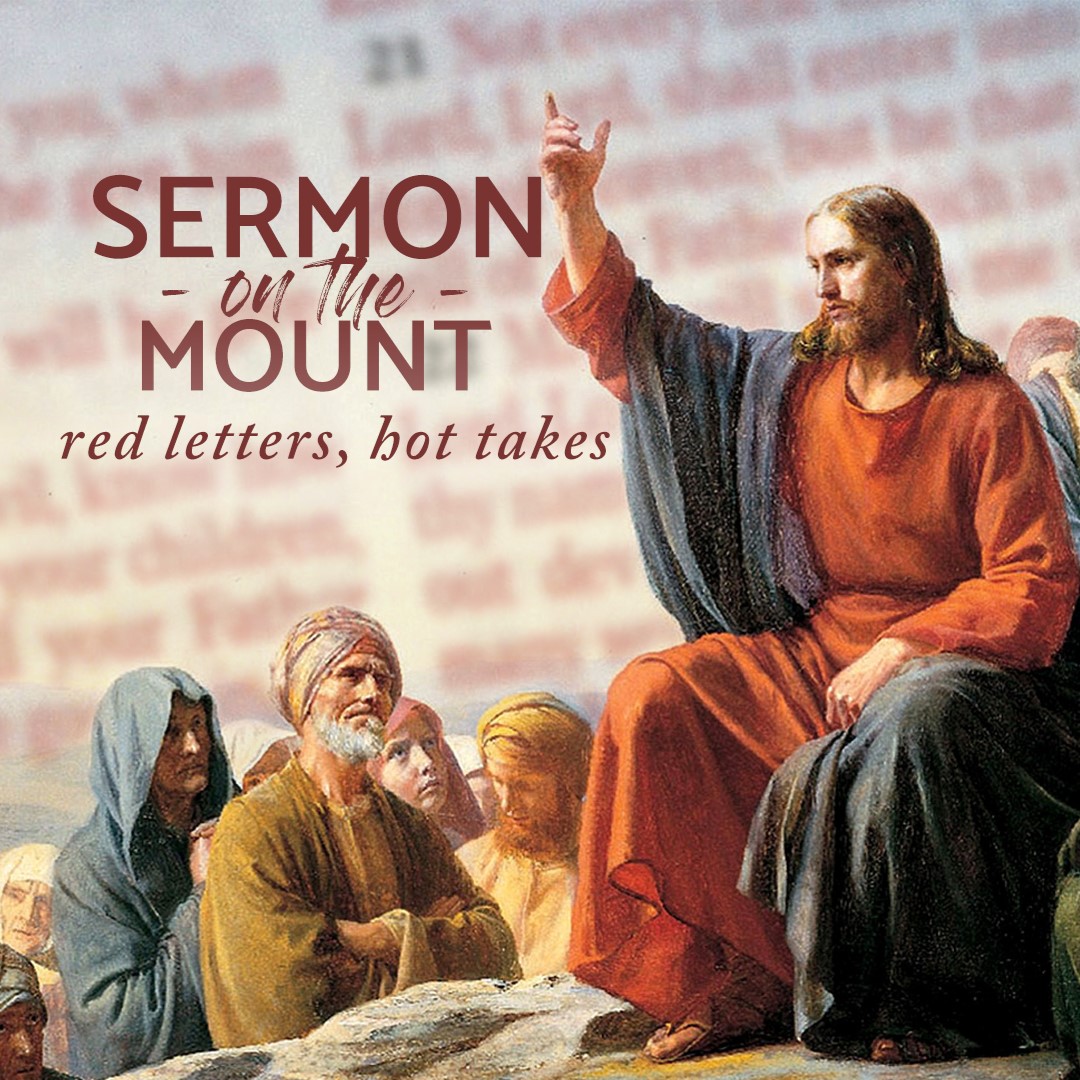
- (vv. 1-2) Although one would stand to read Scripture publicly, the most respected Jewish teachers would usually sit to expound it, often with disciples sitting at their feet. Some scholars have compared the “mountain” (cf. Lk 6:17) here to Mount Sinai, where God through Moses first taught his ethics by the law (Ex 19-20; cf. Is 2:2-3). (Craig S. Keener, The IVP Bible Background Commentary: New Testament, 66)
- This, the first of Matthew’s great ‘discourses’ (see the Introduction), is generally known as the ‘Sermon on the Mount’. It has the same general outline as the sermon recorded in Lk. 6:20—49 but is very much longer, including both material found elsewhere in Luke and a great deal found only in Matthew. The controlling theme around which this material is collected is that of discipleship, or ‘life in the kingdom of heaven’. Having called his first disciples, Jesus set out for them an overview of the privileges and the demands of their new situation. (D. A. Carson, New Bible Commentary, 911)
- The introduction to this discourse has in one sense already begun in 4:23-25, since the crowds, introduced in 4:25, are cited as the reason for Jesus’ move up into the hills. But the audience of the iscourse is specified not as the crowds but as “his disciples,” a term used here for the first time in Matthew, but presumably intended in context to denote those who have been called to follow him in 4:18-22, together with others who share the same calling and commitment. (R. T. France, Matthew, 197)
- Matthew explicitly indicates that Jesus taught his disciples (Matthew 5:1-2) but also that the crowds were present (Matthew 5:1; Matthew 7:28—Matthew 8:1), implying that Jesus wanted both to hear, calling both to decision (Matthew 7:24-27; see Guelich 1982:60). (Craig S. Keener, IVP New Testament Commentary, Matthew, 94)
What do the Beatitudes reveal about who is truly blessed when it comes to God’s kingdom?
- God blesses the unlikely; those empty before Him.
(vv. 3–6; cf. Ps. 34:18; 51:17; Prov. 3:34; Is. 57:15; Mat. 11:28–30; Luke 18:13–14)
(“poor in spirit”) The phrase describes those who are conscious of deserving nothing and needing everything from God. They accept with gratitude what He bestows, and without bitterness what He withholds. Their trust is not in human resources, but in divine faithfulness. (William E. McCumber, Matthew, 34)
To be poor is spirit is to recognize one’s spiritual poverty apart from God. It is to see oneself as one really is: lost, hopeless, helpless. Apart from Jesus Christ every person is spiritually destitute, no matter what his education, wealth, social status, accomplishments, or religious knowledge. (John MacArthur, New Testament Commentary: Matthew 1-28, 180)
- God blesses the unnatural; those whose virtues the world resists.
(vv. 7–9; cf. Rom. 12:14, 17–18; Gal. 5:22–23; Col. 3:12–13; James 3:17–18; 1 John 3:18)
The very characters which the Lord Jesus praises the world despises; the very pride, and thoughtlessness, and high tempers, and worldliness, and selfishness, and formality, and unloving-ness, which abound everywhere, the Lord Jesus condemns. (J. C. Ryle, Expository Thoughts on Matthew, 25)
The thrust of the Sermon on the Mount is that the message and work of the King are first and most importantly internal and not external, and spiritual and moral rather than physical and political. Here we find no politics or social reform. His concern is for what men are, because what they are determines what they do. (John MacArthur, Matthew 1-28, 165)
- God blesses the unpopular; those rejected on earth, yet rewarded in heaven.
(vv. 10–12; cf. Mat. 10:22; Luke 6:22–23; John 15:18–20; Acts 5:41; 2 Tim. 3:12; Heb. 10:34–36; 1 Peter 4:12–14; Rev. 2:10)
As we read the Beatitudes, we find that they represent an outlook radically different from that of the world. The world praises pride, not humility. The world endorses sin, especially if you “get away with it.” The world is at war with God, while God is seeking to reconcile His enemies and make them His children. We must expect to be persecuted if we are living as God wants us to live. But we must be sure that our suffering is not due to our own foolishness or disobedience. (Warren Wiersbe, The Wiersbe Bible Commentary, 19)
The Lord Jesus calls those “blessed” who are peacemakers. He means those who use all their influence to promote peace and charity on earth, in private and in public, at home and abroad. He means those who strive to make all men love one another, by teaching that Gospel which says, “Love is the fulfilling of the law.” (Romans 13:10) (J. C. Ryle, Expository Thoughts on Matthew, 25)
Conclusion: How should we live in light of Jesus’ “backward blessings”?
- Humbly before God; dependent on Him rather than self.
(Ps. 121:1–2; Prov. 16:18; Is. 41:10; Jer. 17:7–8; Zech. 4:6; John 15:5; 2 Cor. 3:5; Phil. 4:13)
Those who know their poverty and look to God’s bounty are not disappointed. They possess the kingdom of heaven, living under Messiah’s healing and saving reign. (William E. McCumber, Beacon Bible Expositions, Matthew, 35)
Humility is the very first letter in the alphabet of Christianity. We must begin low, if we would build high. (Isaiah 6:21; Revelation 3:17) (J. C. Ryle, Matthew, 24)
- Distinctly in the world; with Spirit-shaped character marking our life.
(Mat. 5:13–16; John 13:34–35; Rom. 12:2; Gal. 6:9–10; Phil. 2:14–15; Col. 4:5–6; 1 Thes. 5:15; Titus 2:11–12; 1 Peter 2:12)
The virtue of a man ought to be measured, not by his extra-ordinary exertions, but by his everyday conduct. (Blaise Pascal, Pensées)
What a man rejoices in is a fair test of his character. To be glad when evil prevails, or to rejoice in the misfortunes of others is indicative of great moral degradation. (Graham Scroggie, The Love Life, 44)
As the Sermon on the Mount itself makes clear, internal changes also bring external changes. When our attitudes and thinking are right, our actions will fall in line. If our inner life does not make our outer life better, our inner life is deficient or nonexistent. (John MacArthur, Matthew 1-28, 172)
- Courageously for Christ; rejoicing when the world rejects what heaven rewards.
(Ps. 27:1; Dan. 3:17–18; Acts 4:19–20; Rom. 1:16; 1 Cor. 16:13; 2 Cor. 4:16–18; Eph. 6:10–11; Heb. 13:6; Rev. 12:11)
The lifestyle of the kingdom of heaven is so different from worldly social structures that followers of Jesus cannot escape verbal and physical mistreatment. But life with the King and in the Kingdom overcompensates for the hostility and hurt endured. (William E. McCumber, Beacon Bible Expositions, Matthew, 35)
The fear of the Lord tends to take away all other fears… This is the secret of Christian courage and boldness. (Sinclair Ferguson, Grow in Grace, 33)
God’s peacemakers will not always have peace in the world. As Jesus makes clear by the last beatitude, persecution follows peacemaking. In Christ we have forsaken the false peace of the world, and consequently we often will not have peace with the world. But as God’s children we may always have peace even while we are in the world—the peace of God, which the world cannot give and the world cannot take away. (John MacArthur, New Testament Commentary: Matthew 1-28, 259)
Gospel Connection:
In Jesus, true blessing is found not in what the world values, but in belonging to Him and His kingdom.
(John 10:10; 14:6; Romans 8:1; 2 Corinthians 5:17; Galatians 2:20; Ephesians 1:3; Colossians 1:13–14; Philippians 3:7–9; Hebrews 12:2; 1 Peter 1:3–4)
After seeing that Jesus is the long-awaited Messiah, we must also see that His is the long-awaited kingdom. Again, this point is critical to understanding the Sermon on the Mount—there is indeed a new kingdom, a new people. It was God’s intention all along not just to give commandments to His people, but to create a new people with new hearts, new affections, and new attitudes. (David Platt, Exalting Jesus in Matthew, 107)
Spiritual Challenge Questions…
Reflect on these questions in your time with the Lord this week, or discuss with a Christian family member or Life Group.
- Which of the Beatitudes speaks most personally to you right now? Why?
- How does being “poor in spirit” differ from having low self-esteem?
- Which of the “unnatural” virtues (mercy, purity, peacemaking) do you find hardest to live out?
- In what ways does the world’s definition of blessing differ from God’s definition?
- How does the gospel of Jesus reshape your understanding of what it means to be blessed?
- What’s one specific way you can live out a “backward blessing” in your home, workplace, or community this week?
HFM @ Home …
New this week (and going forward), here you’ll find short readings from the Free Methodist and Heidelberg Catechisms. These historic resources give solid, Scripture-based teaching to help us know what we believe and live it out as Jesus’ disciples. Take them home, read them on your own, and discuss with family, friends, or roommates. Use them for reflection, conversation, and prayer. My hope is that they will help strengthen your walk with Jesus and deepen our shared faith as a church family in the years ahead. (PD)
The Christian gospel teaches that we come into a personal relationship with God through Jesus Christ. God who made us also preserves us in His constant care. He sent His only begotten Son from heaven to earth to dwell among us, die for us, and redeem us from our sin and misery. The Father now sends His Holy Spirit Who dwells within us to assure us that we are His children, to gather us into His church, and to help us daily in the journey of faith. We are confident that He Who began a good work in us will bring it to completion in the day of Christ Jesus. (Free Methodist Catechism, 9)
The Heidelberg Catechism, Q&A 1
- What is your only comfort in life and in death?
A. That I am not my own,1 but belong—body and soul, in life and in death2—to my faithful Savior, Jesus Christ.3
He has fully paid for all my sins with his precious blood,4 and has set me free from the tyranny of the devil.5 He also watches over me in such a way6 that not a hair can fall from my head without the will of my Father in heaven;7 in fact, all things must work together for my salvation.8
Because I belong to him, Christ, by his Holy Spirit, assures me of eternal life9 and makes me wholeheartedly willing and ready from now on to live for him.10
11 Cor. 6:19-20 2 Rom. 14:7-9 3 1 Cor. 3:23; Titus 2:14 4 1 Pet. 1:18-19; 1 John 1:7-9; 2:2 5 John 8:34-36; Heb. 2:14-15; 1 John 3:1-116 John 6:39-40; 10:27-30; 2 Thess. 3:3; 1 Pet. 1:5 7 Matt. 10:29-31; Luke 21:16-18 8 Rom. 8:28 9 Rom. 8:15-16; 2 Cor. 1:21-22; 5:5; Eph. 1:13-14 10 Rom. 8:1-17
The teaching of the Scriptures centers on God and the salvation He grants. The church has historically confessed this teaching in the Apostles’ Creed.
THE APOSTLES’ CREED
I believe in God the Father Almighty, Maker of heaven and earth; And in Jesus Christ, His only Son, our Lord; who was conceived by the Holy Spirit, born of the Virgin Mary, suffered under Pontius Pilate, was crucified, dead and buried; He descended into Hades; the third day He arose from the dead; He ascended into heaven and sits at the right hand of God the Father Almighty; from thence He shall come to judge the living and the dead.
I believe in the Holy Spirit, the holy catholic church, the communion of saints, the forgiveness of sins, the resurrection of the body, and the life everlasting. Amen.
September 7, 2025
Matthew 5:1–12
“Backward” Blessings
Pastor David Turner