
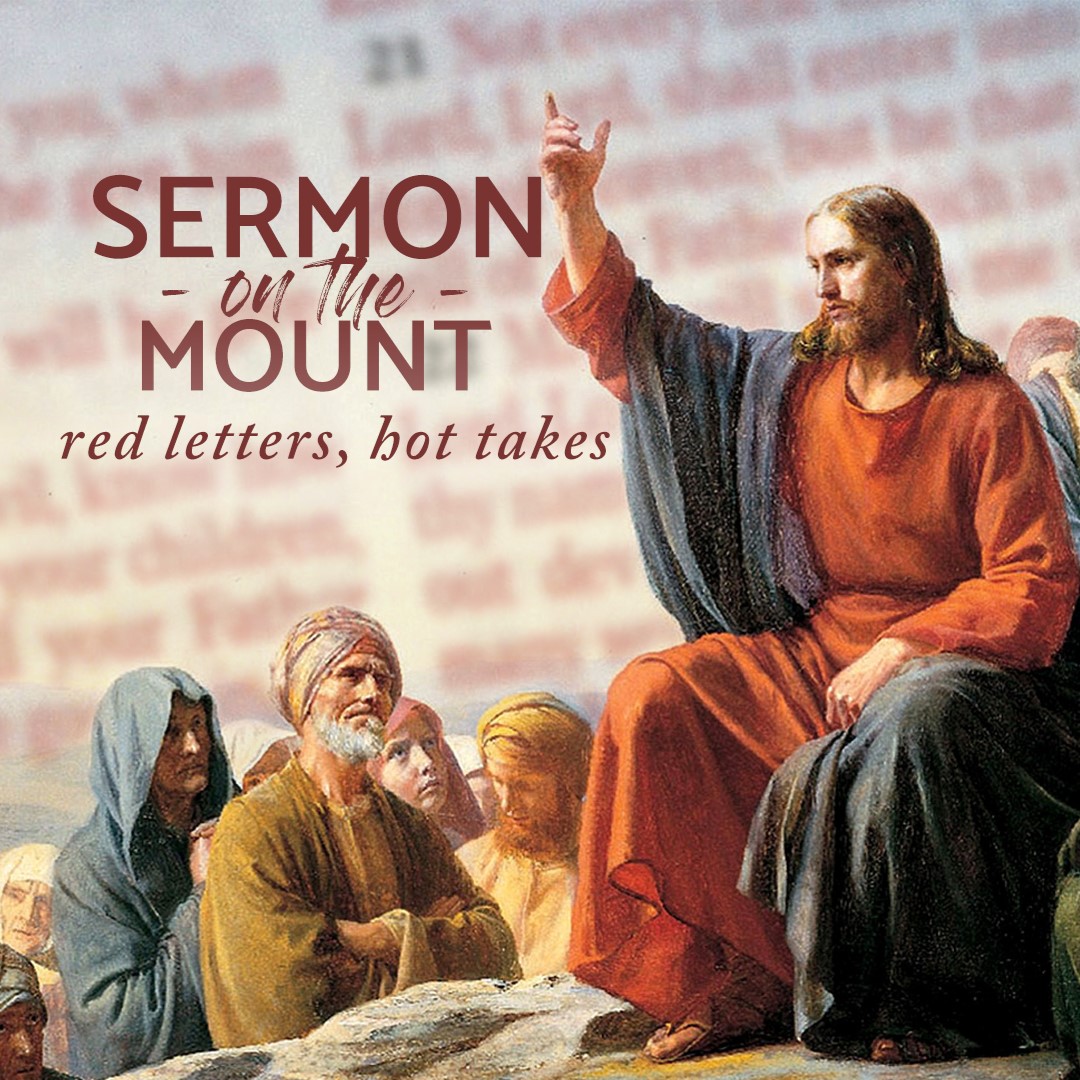
September 21, 2025
Matthew 5:17-20
“Jesus and the Fine Print”
Service Overview: Jesus didn’t come to cancel the Law but to complete its purpose. In this pivotal passage, He calls His followers to a deeper, more authentic righteousness, one that surpasses external religion and flows from the heart. What does it mean to live faithful to God’s Word in light of Jesus’ fulfillment?
Memory Verse for the Week:
Matthew 5:17 – “Do not think that I have come to abolish the Law or the Prophets; I have not come to abolish them but to fulfill them.”
Background & Technical Insights:
- Jews of that day referred to the law in four different ways. In its most limited sense it was used of the Ten Commandments. In a broader sense it was used of the Pentateuch, the five books written by Moses. In a still broader sense it was used to speak of the entire Scriptures, what we now call the Old Testament. (John MacArthur, Matthew 1-28, 297)
- Six times [Jesus] uses the words, But I say unto you. Twice He says, Verily (Gk., amen; RSV, truly) I say unto you. Once He says, I say unto you. The conjunction is adversative and the first-person pronoun is emphatic. This mode of address was unique in Israel and implies volumes concerning His uniqueness as the Son of God. … The scribes cited “authorities” to buttress their interpretations of law, but using such a formula as Jesus here employs would have been unthinkable to them. Clearly He is conscious of possessing an authority unprecedented among His people. (William E. McCumber, Beacon Bible Expositions, Matthew, 38)
- Jewish teachers said that one “abolished” the law by disobeying it (cf. Deut 27:26), because one thereby rejected its authority. Such highhanded rebellion against the law—as opposed to particular sins—warranted social and spiritual expulsion from the Jewish community. The charge of openly persuading others that the law was no longer in force would be even worse. Jesus opposed not the law but an illegitimate traditional interpretation of it that stressed regulations more than character. (Craig S. Keener, IVP Bible Commentary: New Testament, 68)
- “The Law and the Prophets” is Jesus’ way of referring to the entire Old Testament (7:12; 22:40), and He says that He didn’t come to abolish the Old Testament, but to fulfill it. That word “fulfill” is the same one we noticed earlier, as we’re reminded again that Jesus came to fulfill the intention of the Old Testament, that is, to bring it to its intended completion. And the fulfillment Jesus has in mind here in relation to the Old Testament is not simply external conformity to its commands, but rather a heart alive to God. This is what the law was calling for all along (Deut 30:6). (David Platt, Exalting Jesus in Matthew, 108)
What does Jesus teach about His relationship to the Law and our righteousness?
- Jesus came to fulfill the Law, not abolish it.
(vv. 17–18, cf. Luke 24:44; John 19:30; Rom. 8:3–4; 10:4; Heb. 10:1; 7:11-12)
The Sermon on the Mount makes two things clear, the devotion of Jesus to law and His opposition to legalism. He did not come to destroy, but to fulfil the law (17). His opposition to the legalism of scribes and Pharisees was misread as antinomianism. Jesus avoided both evils. (McCumber, Matthew, 37)
Jesus made it clear that He had come to honor the law and help God’s people love it, learn it, and live it. He would not accept the artificial righteousness of the religious leaders. Their righteousness was only an external masquerade. Their religion was a dead ritual, not a living relationship. It was artificial; it did not reproduce itself in others in a living way. It made them proud, not humble; it led to bondage, not liberty. (Warren Wiersbe, The Wiersbe Bible Commentary, 19)
- God’s Word remains instructive and authoritative.
(v. 18–19, cf. Ps. 19:7–11; Prov. 30:5; Is. 40:8; Mat. 24:35; 2 Tim. 3:16–17; 1 Pet. 1:24–25)
In vs 17-20 Jesus places the Law alongside the Prophets as finding fulfilment in him. To fulfil is to bring about that to which Scripture pointed, and that is what Jesus has now done. But the fulfilment of the law does not mean its abolition; it remains wholly authoritative and demands the fullest respect of the disciple (18-19). (D. A. Carson, New Bible Commentary, 912)
- True righteousness exceeds the letter of the law or mere surface-level faith.
(v. 20, cf. 1 Sam. 16:7; Jer. 31:33; Ez. 36:26–27; Rom. 2:28–29; Phil. 3:8–9; James 2:17)
The righteousness which exceeds that of scribes and Pharisees, therefore, is not an intensified legalism which out pharisees the Pharisees. It is the grateful obedience of those who recognize the claims of Jesus upon them as Lord, and who acknowledge Him as the One who puts them right with God by fulfilling His role as the Suffering Servant Messiah. (McCumber, Matthew, 37)
It is possible to agree with everything Jesus taught in this sermon yet fail to live accordingly (Matthew 23:3). That is why Jesus indicates that the best of human piety is inadequate for salvation—whether it be Pharisaic or Christian. Nothing short of a radical transformation, what other early Christian writers called a new birth (Jn 3:3-6; 1 Pet 1:23), can enable one to live as a disciple (compare Mt 18:3). (Craig S. Keener, Matthew, 103)
The righteousness of the scribes and the Pharisees was purely an external righteousness. But Jesus says that it’s not enough to be righteous on the outside if you are not also righteous on the inside. What Jesus is demanding is not more righteous deeds by human effort, but more righteous hearts by divine grace. (David Platt, Exalting Jesus in Matthew, 109)
Conclusion: How do we live faithful in light of Jesus’ fulfillment?
- Treasure God’s Word as enduring truth.
(Deut. 6:6–9; Josh. 1:8; Ps. 1:1–3; 119:160; Matt. 4:4; John 6:68; 17:17; Col. 3:16)
God does not allow us the right to say, “I will obey his teaching about murder but not his teaching about adultery or fornication”; or, “I will obey his teaching about theft but not about divorce.” To refuse his right to rule any of our ethics or behavior is to deny his lordship. (Craig S. Keener, Matthew, 102)
[The Bible] does not merely conform to a higher standard of truth; the Bible itself is the standard of truthfulness. (Andy Naselli, Scripture – How the Bible is Like No Other, 62)
- Obey from the heart, not just in outward form.
(Deut. 30:6; Matt. 22:37–40; John 14:15; Rom. 6:17; 12:1–2; James 1:22–25; 1 John 5:3)
Wicked men obey from fear; good men, from love. (Augustine)
We cannot live the righteous life or be God’s faithful witnesses by lowering His standards and claiming to follow a higher law of love and permissiveness. Whatever is contrary to God’s law is beneath His law, not above it. (John MacArthur, Matthew 1-28, 296)
Behavior modification that’s not empowered by God’s heart-changing grace is self-righteousness, as repugnant to God as the worst sins people gossip about. (Randy Alcorn, The Grace and Truth Paradox, 37)
- Depend on Christ for a righteousness we could never achieve.
(Rom. 3:20–24; 5:17–19; 8:1–4; 2 Cor. 5:21; Gal. 2:16; 3:10–14; Eph. 2:8–10; Phil. 3:9; Titus 3:5–7; Heb. 7:25)
Because we are united by faith to [Jesus Christ] who is perfectly righteous, God accepts us as perfectly righteous. God does not resort to some kind of legal fiction, calling something righteous that is not. Rather, He declares us righteous on the basis of the real accomplished righteousness of Christ, imputed to us because of our union with Him. (Jerry Bridges, The Gospel for Real Life, 103)
If we think it is unfair for us to be represented by Adam, then we should also think it is unfair for us to be represented by Christ and to have His righteousness imputed to us by God. (Wayne Grudem, Systematic Theology, 495)
The Holy Spirit enables us to experience the “righteousness of the law” in daily life. This does not mean we live sinlessly perfect lives, but it does mean that Christ lives out His life through us by the power of His Spirit (Gal. 2:20). (Warren Wiersbe, The Wiersbe Bible Commentary, 20)
Gospel Connection:
Jesus fulfilled the Law we could never keep, so that by His righteousness credited to us, we are freed to live for Him.
(Jer. 31:31–34; Acts 13:38–39; Rom. 5:1; 7:6; 8:3–4; 2 Cor.s 5:21; Gal. 5:1; Col. 2:13–17; Heb. 10:10–14)
Every time we look at the cross, Christ seems to say to us, “I am here because of you. It is your sin I am bearing, your curse I am suffering, your debt I am paying, your death I am dying.” Nothing in history or in the universe cuts us down to size like the cross. All of us have inflated views of ourselves, especially in self-righteousness, until we have visited a place called Calvary. It is there, at the foot of the cross, that we shrink to our true size. (John Stott, Galatians, 179)
Whenever a Christian looks at God’s moral law with humility, meekness, and a sincere desire for righteousness, the law will invariably point him to Christ—as it was always intended to do. And for believers to live by it is for them to become like Christ. (John MacArthur, New Testament Commentary: Matthew 1-28, 317)
Spiritual Challenge Questions…
Reflect on these questions in your time with the Lord this week, or discuss with a Christian family member or Life Group.
- How does knowing Jesus fulfilled the Law change the way you read the Old Testament?
- Why do we sometimes struggle to treat God’s Word as authoritative in our daily lives?
- What are some examples what of “surface-level faith” that looks like? How do we guard against reducing our faith to outward performance?
- How does depending on Christ for righteousness free you from guilt or pride?
- How does the truth that Jesus fulfilled the Law we could never keep give you joy and confidence in your faith?
HFM @ Home …
Resources for discipleship from the Free Methodist and Heidelberg Catechisms; providing solid, historic, Scripture-based teaching to help us learn and reflect on our shared faith as Jesus’ disciples.
The Heidelberg Catechism
Q2. What must you know to live and die in the joy of this comfort [of eternal life]?
- Three things: first, how great my sin and misery are;1second, how I am set free from all my sins and misery;2third, how I am to thank God for such deliverance.3
1 Rom. 3:9-10; 1 John 1:102 John 17:3; Acts 4:12; 10:433 Matt. 5:16; Rom. 6:13; Eph. 5:8-10; 2 Tim. 2:15; 1 Pet. 2:9-10
The Declaration of Faith and Twelve Affirmations of the Apostles Creed
The Apostles creed is outlined around the Persons of the Trinity, the Father, the Son and the Holy Spirit. After the declaration of faith, “I believe,” the creed offers twelve affirmations. Affirmation one pertains to the Father, affirmations two through seven to the Son, and affirmations eight through twelve to the Holy Spirit.
THE DECLARATION OF FAITH: “I BELIEVE”
“Without Faith It Is Impossible to Please God”2
We can learn many things about the world and ourselves through investigation and the use of our minds. We can even come to some knowledge of the Supreme Being3. However, we cannot come to a clear knowledge of God apart from faith. This is because:
- God is invisible4 and beyond our comprehension5
- our understanding is distorted by sin and self-centeredness.6
Knowledge of God is necessary for our salvation. The Scripture says: “Without faith it is impossible to please God, because anyone who comes to him must believe that he exists and that he rewards those who earnestly seek him.”7
If we are to have a sure knowledge of God and trust Him for our salvation, He must reveal the truth to us, and we must believe what He has revealed.”8
2 Hebrews 11:6; 3 Romans 1:19-20; Acts 14:15-17; 4 John 1:8: 6:46, 1 John 4:12; 5Isaiah 40:13-14; Romans 3:11; 6 Romans 1:21; 3:11; 7 Hebrews 11:6; 8 Romans 10:14-15; 1 John 1:1-4
September 21, 2025
Matthew 5:17-20
“Jesus and the Fine Print”
Pastor David Turner