
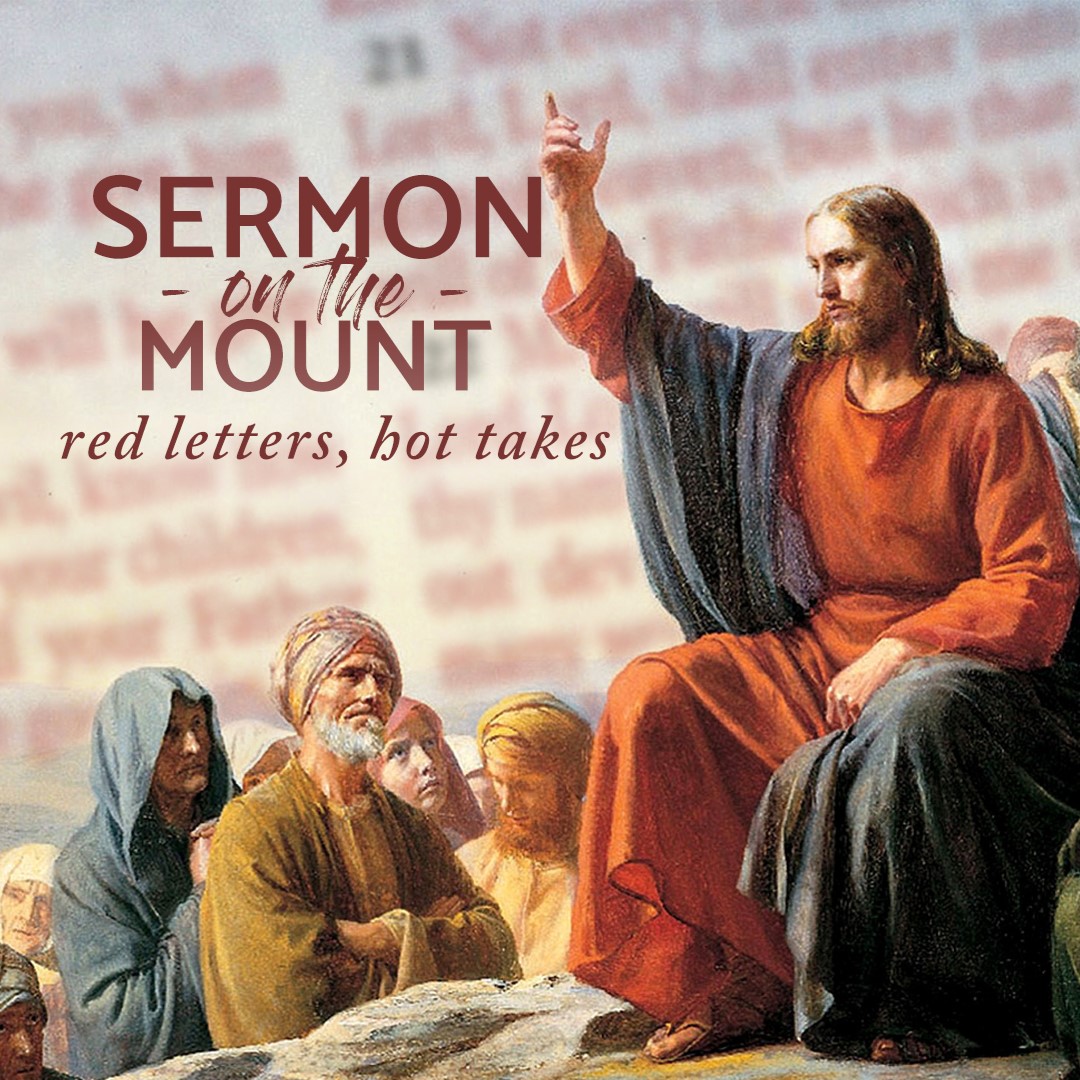
September 28, 2025
Matthew 5:21-26
“The Heart Beneath the Hurt”
Service Overview: Jesus intensifies the command “Do not murder” by tracing its roots back to the heart. Anger, insults, and bitterness all fall under His microscope. In God’s kingdom, reconciliation matters more than self-righteousness. This passage challenges us to take inner conflict seriously and pursue peace urgently; before worship, before excuses, before it’s too late.
Memory Verse for the Week:
Ephesians 4:26–27 – “In your anger do not sin”: Do not let the sun go down while you are still angry, and do not give the devil a foothold.
Background & Technical Insights:
- Six times in verses 21-43 Jesus cites Scripture and then, like a good rabbi, explains it (5:21, 27, 31, 33, 38, 43). The sort of wording he uses (especially “You have heard”) was used by other Jewish teachers to establish the fuller meaning of a text, although Jesus speaks with greater authority than Jewish teachers normally claimed. (Craig S. Keener, The IVP Bible Background Commentary: New Testament, 69)
- The Lord Jesus here explains more fully the meaning of his words, “I came not to destroy the law but to fulfil.” He teaches us that his Gospel magnifies the Law, and exalts its authority: he shows us that the Law, as expounded by him, was a far more spiritual and heart-searching rule than most of the Jews supposed; and he proves this by selecting three commandments out of the ten as examples of what he means. (J. C. Ryle, Matthew, 28)
- So demanding are Jesus’ alternative rulings that those who fully grasp his intention often declare them to be unworkable in the real world. (R. T. France, The New International Commentary on the New Testament: Matthew, 226)
- From the beginning of the Sermon on the Mount Jesus focuses on the internal, on what men are like in their minds and hearts. That is the primary thrust of Matthew 5:21-48, as the Lord reemphasizes the divine standards for living in His kingdom, the divine standards already given in the law of the Old Testament, in contrast to Jewish tradition. (John MacArthur, New Testament Commentary: Matthew 1-28, 327)
- Geenna (hell) is derived from Hinnom, the name of a valley just southwest of Jerusalem used as the city dump. It was a forbidding place where trash was continually burned and where the fire, smoke, and stench never ceased. The location was originally desecrated by King Ahaz when “he burned incense in the valley of Ben-hinnom, and burned his sons in fire, according to the abominations of the nations whom the Lord had driven out before the sons of Israel” (2 Chron. 28:3). (John MacArthur, Matthew 1-28, 341)
What does Jesus teach us about God’s kingdom ethic concerning anger and reconciliation?
- God’s law penetrates deeper than mere outward behavior.
(vv. 21–22; cf. Prov. 4:23; Jer. 17:9–10; Mat. 15:18–19; Rom. 2:28–29; Heb. 4:12)
In this section of the sermon the interiority of law is emphatic. Not actions only, but intentions also come under the judgment of God. (William E. McCumber, Matthew, 38)
Many thought that they kept this part of God’s law so long as they did not commit actual murder. The Lord Jesus shows that its requirements go much further than this. It condemns all angry and passionate language, and especially when used without a cause. Let us mark this well. We may be perfectly innocent of taking life, and yet be guilty of breaking the sixth commandment! (J. C. Ryle, Expository Thoughts on Matthew, 28)
Contrary to the external, superficial, and hypocritical righteousness that typified the scribes and Pharisees, the righteousness God requires is first of all internal. If it does not exist in the heart, it does not exist at all. (John MacArthur, Matthew 1-28, 327)
- God-honoring worship requires reconciled relationships.
(vv. 23–24; cf. Gen. 4:4–7; Lev. 19:17–18; Mat. 18:21–22; Mark 11:25; Heb. 12:14)
True worship is not enhanced by better music, better prayers, better architecture, or even better preaching. True worship is enhanced by better relationships between those who come to worship. (John MacArthur, Matthew 1-28, 343)
Our love ought to follow the love of God in one point, namely, in always seeking to produce reconciliation. It was to this end that God sent His Son. (Charles H. Spurgeon, “Herein Is Love.” Metropolitan Tabernacle Pulpit, Vol. 42, Sermon #1707)
- Reconciliation should be seen as urgent in light of coming judgment.
(vv. 25–26; cf. Prov. 6:16–19; Ecc. 7:9; Mat. 18:15; Rom. 12:18; Eph. 4:26–27; Heb. 3:13; James 5:9)
[Reconciliation] to God involves also being reconciled to men. The mere absence of anger, however, is not enough. A disposition to forgiveness and fellowship is a necessary element in genuine righteousness. (William E. McCumber, Beacon Bible Expositions, Matthew, 38)
God sees what we are each made of. We judge by what we can see of a person’s actions; God evaluates the heart’s motivation. (Craig S. Keener, IVP New Testament Commentary, Matthew, 105)
Conclusion: How should Jesus’ teaching shape the way we live as His disciples?
- We must examine our hearts carefully, for unchecked anger often produces unrighteous action.
(Ps. 139:23–24; Prov. 14:29; 19:11; Ecc. 10:4; Gal. 5:19–21; Col. 3:8; James 1:19–20)
No matter how just your words may be, you ruin everything when you speak with anger. (John Chrysostom)
Of the Seven Deadly Sins, anger is possibly the most fun. To lick your wounds, to smack your lips over grievances long past … to savor to the last toothsome morsel both the pain you are given and the pain you are giving back — in many ways it is a feast fit for a king. The chief drawback is that what you are wolfing down is yourself. The skeleton at the feast is you. (Buechner, Wishful Thinking, 2)
- We must put people before performance, peace before pretense.
(Lev. 19:18; Hos. 6:6; Mic. 6:6–8; Mat. 23:23; John 13:34–35; Rom. 13:10; Phil. 2:3–4)
So there is such a thing as perfect hatred, just as there is such a thing as righteous anger. But it is a hatred for God’s enemies, not our own enemies. It is entirely free of all spite, rancor and vindictiveness, and is fired only by love for God’s honor and glory. (John Stott, The Message of the Sermon on the Mount, 117)
We must take the initiative to restore peace. Jesus taught that it makes no difference whether you have wronged your brother or he has wronged you. Either way, you are always responsible to initiate efforts toward peace (see Matthew 5:23-24 and 18:15). If we are serious about intently pursuing peace, we won’t be concerned about which of us is the offending party. We will have one goal: To restore peace in a godly manner. Unresolved conflict between believers is sin and must be treated as such; otherwise, it will spread throughout the body like cancer until it requires radical spiritual surgery. Far better to deal with it when it is easily contained. (Jerry Bridges, The Practice of Godliness, 164)
- We must pursue reconciliation with urgency.
(Prov. 15:1; Mat. 18:15–17; Luke 17:3–4; Rom. 14:19; 2 Cor. 5:18; Gal. 6:1; Col. 3:12–13; Heb. 12:15; James 3:17–18; 1 Peter 3:11)
It has well been said that the person who refuses to forgive his brother destroys the very bridge over which he himself must walk. (Warren Wiersbe, The Wiersbe Bible Commentary, 20)
Do all you can to be reconciled to others, but remember that you cannot force others to do what is right. If you have done everything within your power to resolve a conflict, you have fulfilled your responsibility to God and may stop actively trying to solve the problem (Rom. 12:18)… It is not necessary or wise to waste time, energy, and resources fretting about someone who stubbornly refuses to be reconciled. (Ken Sande, The Peacemaker, 252)
Gospel Connection:
We all stand guilty of anger, but Jesus bore our judgment to reconcile us to God. Now, having received His peace, we are called to seek peace with others.
(Is. 53:5; John 14:27; Rom. 5:8–10; 2 Cor. 5:18–19; Gal. 2:20; Eph. 2:13–16; Col. 1:19–22)
Be not angry that you cannot make others as you wish them to be, since you cannot make yourself as you wish to be. (Thomas a Kempis)
The gospel being what it is and always will be, “the message of reconciliation” (2 Corinthians 5:19), our churches should be the most reconciling, peaceable, relaxed, happy places in town. We are so open to enemies, so meek in the face of insults and injuries, so forgiving toward the undeserving — if we do make people angry, let this be the reason. We refuse to join in their selfish battles. We’re following a higher call. We are the peacemakers, the true sons of God (Matthew 5:9). (Ray Ortlund, Blog Post: The Ministry of Reconciliation, April 19, 2012)
Spiritual Challenge Questions…
Reflect on these questions in your time with the Lord this week, or discuss with a Christian family member or Life Group.
- Jesus equates anger and insult with murder (Matt. 5:21–22). How does this reshape the way you view “respectable sins” in your own life?
- Why do you think it’s easier to keep our outward actions “clean” while tolerating bitterness in our hearts?
- How does the Bible’s teaching on the heart (Prov. 4:23; Jer. 17:9–10) challenge our culture’s advice to “follow your heart”?
- Why does Jesus say reconciliation must come before worship (Matt. 5:23–24)? How does that affect the way you approach Sunday worship?
- How does God’s reconciliation of us through Christ (2 Cor. 5:18–19) motivate us to reconcile with others? What practical steps can we take as a group or church to cultivate a culture of reconciliation?
HFM @ Home …
Resources for discipleship from the Free Methodist and Heidelberg Catechisms; providing solid, historic, Scripture-based teaching to help us learn and reflect on our shared faith as Jesus’ disciples.
The Heidelberg Catechism
Q3. How do you come to know your misery?
- The law of God tells me. (Rom. 3:20; 7:7-25)
Q4. What does God’s law require of us?
- Christ teaches us this in summary in Matthew 22:37-40:
“‘You shall love the Lord your God with all your heart, and with all your soul, and with all your mind.’1 This is the greatest and first commandment. And a second is like it: ‘You shall love your neighbor as yourself.’2 On these two commandments hang all the law and the prophets.” (1 Deut. 6:5 2 Lev. 19:18)
“The Bible Actually Is the Word of God”9
In His mercy God has revealed this truth to us. Our primary source of revelation is the Holy Scriptures.10 Further, God has guided the church through the centuries so that it has come to understand the teachings of the Scriptures.11
“The Scriptures… Testify About Jesus”12
The Holy Scriptures are the written record of Moses, the prophets, the apostles and especially Jesus Christ, the Word made flesh. These Scriptures report to us what God has done both in His saving work for Israel and through Jesus Christ and what this saving work means. They also teach us about other subjects such as: human nature, God’s will for our lives and our eternal destiny.
“All Scripture Is God-Breathed”13
God, by His Holy Spirit, uniquely inspired the prophets and apostles to give us His truth in a written form. Though the authors of the Scriptures originally addressed their messages to peoples of ancient times in their own languages and literary forms, God continues to speak through this Word to each generation and each culture. The unique inspiration of the Scriptures is shown by:
- the authorization of its writers to speak for God14
- divine assistance which enabled them to speak God’s Word 15
- the Spirit’s illumination of the written Word as it has been read throughout the ages. 16
9 1 Thessalonians 2:13; 10 John 5:39; 11 John 16:13; 12 John 5:39; 13 2 Timothy 3:16; 14 Exodus 3:2-4:17; Isaiah 6:1: Mark 3:14-15; 15 2 Timothy 3:16; 2 Peter 1:2-21; 16 1 John 2:24-27
September 28, 2025
Matthew 5:21-26
“The Heart Beneath the Hurt”
Pastor David Turner