
October 19, 2025
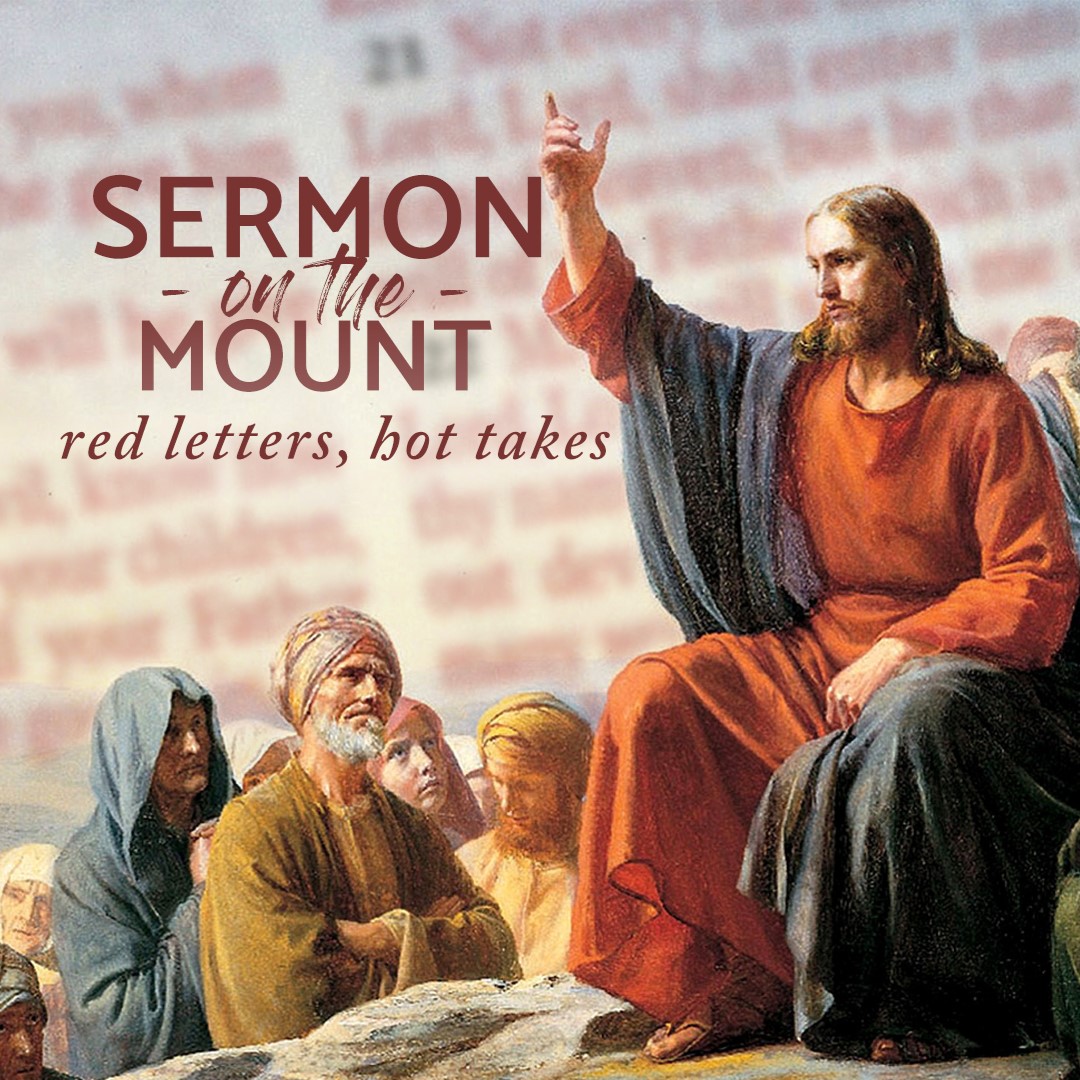
Matthew 5:27-32
“Hard Words, Holy Love”
Service Overview: Jesus moves past surface-level sexual ethics to expose the deeper battle within hearts. Lust, objectification, and broken promises aren’t just cultural issues, they’re soul issues. In this passage, Jesus calls His followers to radical holiness, heart-deep purity, and covenantal integrity that reflects the faithful love of God in every relationship.
Memory Verse for the Week:
1 Corinthians 6:18-20 – Flee from sexual immorality. All other sins a person commits are outside the body, but whoever sins sexually, sins against their own body. Do you not know that your bodies are temples of the Holy Spirit, who is in you, whom you have received from God? You are not your own; you were bought at a price. Therefore honor God with your bodies.
Background & Technical Insights:
- Many ancient Jewish sources warned against lust and emphasized women’s seductiveness; Jesus here emphasizes only the responsibility of the one lusting. … The issue is thus not the doctrine of Jesus’ hearers but their heart. The Greek word here is the same as in the opening line of the tenth commandment in the Septuagint (the Greek version of the Old Testament): “You shall not desire your neighbor’s wife” (Ex 20:17). The tenth commandment, against coveting, forces Jesus’ hearers to internalize Moses’ other commandments. (Craig S. Keener, The IVP Bible Background Commentary: New Testament, 70)
- (vv. 29-30) Cf 18:8—9. Jesus makes his point memorable by exaggeration; the self-mutilation is not to be taken literally, but indicates that the avoidance of temptation may involve drastic sacrifices (the right hand is the more valuable), which may include the severing of relationships or the renunciation of favourite activities. (R. T. France, The Gospel According to Matthew, 124)
- In Jesus’ day the dominant rabbinic position on divorce, and by extension on remarriage, was the most liberal of the four views mentioned above: permissibility on any grounds. The only requirement was the giving of a certificate of dismissal. By that period of Jewish history divorce had become so easy and casual that a man could dismiss his wife for such trivial things as burning his meal or embarrassing him in front of his friends. Often the husband did not bother to give a reason, since none was required. (John MacArthur, Matthew 1-28, 356)
- The “look” that Jesus mentioned was not a casual glance, but a constant stare with the purpose of lusting. It is possible for a man to glance at a beautiful woman and know that she is beautiful, but not lust after her. The man Jesus described looked at the woman for the purpose of feeding his inner sensual appetites as a substitute for the act. It was not accidental; it was planned. (Warren Wiersbe, The Wiersbe Bible Commentary, 21)
What does Jesus reveal about the battle for purity and faithfulness in the human heart?
- He exposes how sin begins not merely in the body, but in the heart.
(vv. 27–28; cf. Prov 4:23; Jer 17:9; Matt 15:18–19; Rom 7:22–23; Heb 4:12; Jas 1:14–15)
Sexual impurity begins in the desires of the heart. Again, Jesus is not saying that lustful desires are identical to lustful deeds, and therefore a person might just as well go ahead and commit adultery. The desire and the deed are not identical, but, spiritually speaking, they are equivalent. (Warren Wiersbe, The Wiersbe Bible Commentary NT, 21)
Lust is the mother of adultery, the demonic force that allows human beings to justify exploiting one another sexually, at the same time betraying the most intimate of commitments where trust ought to abide secure even if it can flourish nowhere else. (Craig S. Keener, IVP New Testament Commentary, Matthew, 108)
- He calls his followers to deal ruthlessly with whatever leads to sin.
(vv. 29–30; cf. Matt 18:8–9; 1 Cor 10:13; Eph 4:22–24; Col 3:5; Tit 2:11–12; Heb 12:1)
Mutilation will not cleanse the heart. The intent of these words is simply to call for dramatic severing of the sinful impulses in us which push us to evil action (cf. Matt. 18:8-9). (John MacArthur, Matthew 1-28, 351)
Jesus affirmed God’s law of purity, and then explained that the intent of this law was to reveal the sanctity of sex and the sinfulness of the human heart. God created sex, and God protects sex. He has the authority to regulate it and to punish those who rebel against His laws. He does not regulate sex because He wants to rob us, but rather, because He wants to bless us. Whenever God says, no it is that He might say yes. (Warren Wiersbe, The Wiersbe Bible Commentary, 20)
- He reminds us that covenant love is sacred, not disposable.
(vv. 31–32; cf. Gen 2:24; Ex 20:14, Mal 2:14-16; Mat 19:4-6; 1 Cor 7:10-11; Eph 5:25-27)
God’s ideal was, and is, monogamous, intimate, enduring marriage. This is what he approves of. Anything less is a departure from the divine model. And the Fall did not change that ideal. We all know that some things possible before the Fall were not possible afterward. But regarding divorce, God’s standard did not change. (R. Kent Hughes, The Sermon on the Mount, 119)
Even though all divorces are the result of sin, not all divorces are sinful. (Jay Adams, Marriage, Divorce, and Remarriage in the Bible, 30)
Divorce is never an ideal; it is always second best. Divorce followed by remarriage is a failure of God’s ideal. But being remarried is not unforgivable. (R. T. Kendall, The Sermon on the Mount, 144)
Conclusion: How do we respond to Jesus’ call to radical holiness and faithful love?
- By carefully guarding what shapes our hearts.
(Prov 4:14-15; Mat 6:21; Rom 12:2; Phil 4:8; Col 3:2; 1 Pet 5:8-9; 1 John 2:15-16)
Imagination is a God-given gift; but if it is fed dirt by the eye, it will be dirty. All sin, not least sexual sin, begins with the imagination. Therefore what feeds the imagination is of maximum importance in the pursuit of kingdom righteousness (Phil. 4:8). (D.A. Carson, Matthew, 151)
How do we get victory? By purifying the desires of the heart (appetite leads to action) and disciplining the actions of the body. (Warren Wiersbe, The Wiersbe Bible Commentary, 21)
- By dealing ruthlessly with what leads us to stumble.
(Ps 101:3; Rom 13:14; 1 Cor 10:13; 2 Cor 7:1; Heb 2:18; Heb 3:13; Jas 4:7–8; 1 Pet 2:11)
Lust never has what it wants because it never has enough. Lust steals joy by creating an endless state of discontentment in the constant search for that one next thing you don’t have yet. Lust is never happy because lust is never full. (Heath Lambert, Finally Free, 130)
Anger and sexual lust are two of the most powerful influences on mankind. The person who gives them reign will soon find that he is more controlled than in control. (John MacArthur, Matthew 1-28, 346)
The Bible teaches that sex is a force that can get out of control. These basic drives built into us by our Creator can lead to danger if they get out of control. For example, the hunger drive is needed for survival—but out of control it can mean a glutton’s death. The same is true of the sex drive. Out of control in the human race, it could lead to chaos. Unlicensed, uncontrolled sexual activity would destroy the human race. (Stuart Briscoe, The Sermon on the Mount, 107)
- By honoring our covenants with steadfast love.
(Num 30:2; Ps 15:4; Prov 3:3–4; 20:6–7; Eccl 5:4–5; 1 Cor 13:4–7; Eph 5:25–27)
Lust demands possession; love values, respects and seeks to serve other persons with what is genuinely good for them. (Craig S. Keener, Matthew, 108)
Staying married, therefore, is not mainly about staying in love. It is about keeping covenant. “Till death do us part” or “As long as we both shall live” is a sacred covenant promise – the same kind Jesus made with His bride when He died for her. (John Piper, This Momentary Marriage, 25)
As God designed it, marriage is to be the welding of two people together into one unit, the blending of two minds, two wills, two sets of emotions, two spirits. It is a bond the Lord intends to be indissoluble as long as both partners are alive. The Lord created sex and procreation to be the fullest expression of that oneness, and the intimacies of marriage are not to be shared with any other human being. (John MacArthur, Matthew 1-28, 359)
Gospel Connection:
In Christ, our shame is lifted, our hearts are cleansed, and our lives are set free to love as He loves.
(John 8:36; Rom 6:6–7; Rom 8:1–2; 2 Cor 5:17; Gal 5:1; Eph 1:7; Tit 3:4–5; 1 Pet 2:24)
What man or woman upon earth can ever stand before such a God as this, and plead “not guilty”? Who is there that has ever grown to years of discretion, and not broken the commandments thousands of times? “There is no one righteous, no not one.” (Romans 3:10) Without a mighty mediator we should every one be condemned in the judgment day. Ignorance of the real meaning of the law is one plain reason why so many do not value the Gospel, and content themselves with a little formal Christianity. They do not see the strictness and holiness of God’s Ten Commandments; if they did, they would never rest till they were safe in Christ. (J. C. Ryle, Expository Thoughts on Matthew, 29)
Spiritual Challenge Questions…
Reflect on these questions in your time with the Lord this week, or discuss with a Christian family member or Life Group.
- Why do you think Jesus used such extreme language (“gouge out your eye,” “cut off your hand”) to describe dealing with sin? What practical, modern equivalents might that look like in your own life?
- How can followers of Jesus discern the difference between normal human attraction and sinful lust?
- In verses 31–32, Jesus addresses divorce and covenant faithfulness. What does this reveal about God’s view of promises, marriage, and commitment?
- Where do you see “easy-exit” thinking creeping into relationships today (friendships, marriages, even church life)? How can believers resist that cultural drift toward disposability?
- How do shame and secrecy often keep people trapped in cycles of impurity or unfaithfulness? What role does confession, accountability, and grace-filled community play in breaking that cycle?
- What does “dealing ruthlessly with sin” look like without becoming self-righteous or legalistic?
HFM @ Home …
Resources for discipleship from the Free Methodist and Heidelberg Catechisms; providing solid, historic, Scripture-based teaching to help us learn and reflect on our shared faith as Jesus’ disciples.
The Heidelberg Catechism
Q5. Can you live up to all this perfectly?
- No.1 I have a natural tendency to hate God and my neighbor.2
(1Rom. 3:9-20, 23; 1 John 1:8, 10 2Gen. 6:5; Jer. 17:9; Rom. 7:23-24; 8:7; Eph. 2:1-3; Titus 3:3)
Q6. Did God create people so wicked and perverse?
- No. God created them good1 and in his own image,2 that is, in true righteousness and holiness,3 so that they might truly know God their creator,4 love him with all their heart, and live with God in eternal happiness, to praise and glorify him.5 (1Gen. 1:31. 2Gen. 1:26-27. 3Eph. 4:24. 4Col. 3:10. 5Ps. 8)
Q7. Then where does this corrupt human nature come from?
- The fall and disobedience of our first parents, Adam and Eve, in Paradise.1 This fall has so poisoned our nature2 that we are all conceived and born in a sinful condition.3 (1Gen. 3. 2Rom. 5:12, 18-19. 3Ps. 51:5)
The Canon of the Scriptures
The church calls “canonical” those writings which it recognizes as uniquely inspired. A canon is a set of books that serves as the standard for faith and practice. The canon is comprised of two parts:
- the Old Testament, consisting of 39 books of the Hebrew Bible that our Lord17 and the apostles18 accepted as authoritative. These are divided into the Law, the Prophets.
- and the Writings of the New Testament, which includes 27 books accepted as authoritative by the early church. These are made up of the four Gospels, the Acts of the Apostles, the 13 letters of Paul, the eight general letters, and the Revelation of John.
The Sufficiency of the Scriptures
The church believes that the Scriptures are the final authority for all that we teach and believe. Whatever is neither found in the Bible nor can be proved by it, is not to be:
- required as an article of belief
- held as necessary to salvation.
(17 Mark 7:6; 12:26, 36; 18 Romans 4:3: Hebrews 10:16: 1 Peter 1:18)
October 19, 2025
Matthew 5:27-32
“Hard Words, Holy Love”
Pastor David Turner