
October 26, 2025
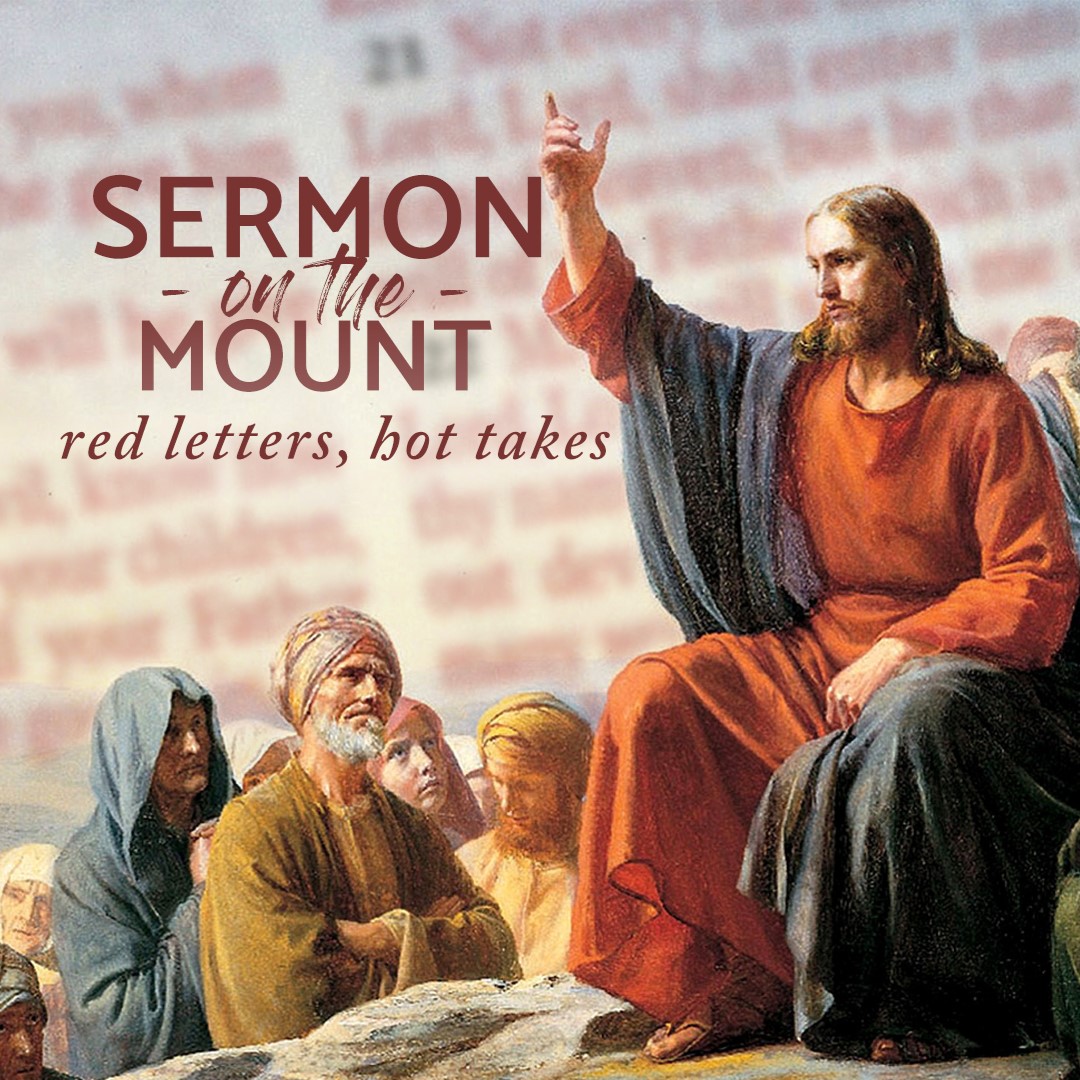
Matthew 5:38-48
“Retaliation Redefined”
Overview: Jesus dismantles the cycle of retaliation and replaces it with a call to radical love. He teaches that true righteousness isn’t just refusing to hit back – it’s choosing to bless, serve, and pray for enemies. In this stunning command, Jesus redefines what it means to be children of the Father in heaven.
Memory Verse for the Week:
Matthew 5:44 – But I tell you, love your enemies and pray for those who persecute you
Background & Technical Insights:
- The principle of proportionate retribution (here quoted from Ex. 21:24-25; Lv. 24:20; Dt. 19:21) was older and more widely recognized than the Mosaic law, being found already in the Code of Hammurabi (eighteenth century BC) with the same examples of eye and tooth. Its intention was not to sanction revenge, but to prevent the excesses of the blood-feud by stating that the legal punishment must not exceed the crime. (R. T. France, Matthew, 125)
- Striking a person on the right cheek suggests a backhanded slap from a typically right-handed aggressor and was a characteristic Jewish form of insult. Jesus tells us not to trade such insults even if it means receiving more. (Craig L. Blomberg, Matthew, 117)
- 5:39. The blow on the right cheek (e.g., Job 16:10; Lam 3:30) was the most grievous insult in the ancient world (apart from inflicting serious physical harm), and in many cultures was listed alongside the “eye for an eye” laws; both Jewish and Roman law permitted prosecution for this offense. (Craig S. Keener, The IVP Bible Background Commentary: New Testament, 72)
- Because the outer cloak doubled as a poor man’s bedding, biblical law permitted no one to take it, even as a pledge overnight (Ex 22:26-27; Deut 24:12-13). Thus Jesus demands that we surrender the very possession the law explicitly protects from legal seizure. To force his hearers to think, then, Jesus provides a shockingly graphic, almost humorous illustration of what he means by nonresistance. (Craig S. Keener, Matthew, 118)
- It is of the utmost significance that each of the three Pentateuch accounts that prescribe the eye for an eye principle has to do with the civil justice system. Exodus 21-23 deals entirely with God’s provision for Israel’s civil law, as do the similar teachings in Leviticus 24 and Deuteronomy 19. Punishment was sometimes carried out by the victim, but the trial and sentencing were always the responsibility of duly appointed judges or of a large, representative body of citizens (see Ex. 21:22; Deut. 19:18; Lev. 24:14-16). (John MacArthur, New Testament Commentary: Matthew 1-28, 380)
- If the spirit of these ten verses were more continually remembered by true believers, they would recommend Christianity to the world far more than they do. (J. C. Ryle, Expository Thoughts on Matthew, 31)
What does Jesus teach about Kingdom living in a world obsessed with payback?
- Kingdom living replaces retaliation with restraint.
(vv. 38–42 cf. Prov 20:22; 24:29; Lk 6:29–30; Rom 12:17–19; 1 Cor 13:4–7; 1 Th 5:15)
A readiness to resent injuries, a quickness in taking offense, a quarrelsome and contentious disposition, a keenness in asserting our rights—all are contrary to the mind of Christ. (J. C. Ryle, Expository Thoughts on Matthew, 30)
Jesus is not so much revoking a standard for justice as calling his followers not to make use of it; we qualify justice with mercy because we do not need to avenge our honor. Jesus calls for this humble response of faith in God; God alone is the final arbiter of justice, and we must trust him to fulfill it. (Craig S. Keener, Matthew, 117)
- Kingdom living replaces revenge with radical love.
(vv. 43–47 cf. Lk 6:27–31; 10:29–37; Rom 12:20–21; Eph 4:31–32; Col 3:12–14)
Almost all people look after their own. The true test of genuine Christianity is how believers treat those whom they are naturally inclined to hate or who mistreat or persecute them. (Craig L. Blomberg, Matthew, 118)
Jesus’ words strike at the very core of human selfishness, summoning us to value others above ourselves in concrete and consistent ways. Some misread this text as if it says not to oppose injustice; what it really says, however, is that we should be so unselfish and trust God so much that we leave our vindication with him. (Craig S. Keener, Matthew, 116)
What does Jesus mean when he says, ‘Turn the other cheek’? Can Jesus be suggesting that the Christian deliberately put himself in the way of further suffering? No, Jesus is reminding his disciples in this figurative way that to stand on their ‘rights’ and seek to have their dignity reaffirmed is not the Christian response to any insult. (Sinclair B. Ferguson, The Sermon on the Mount, 114)
- Kingdom living replaces rules with seeking to reflect the Master.
(v. 48 cf. Lk 6:35–36; Rom 8:29; 2 Cor 3:18; Phil 2:5–8; Col 3:9–10; 1 Pt 1:15–16)
The word perfect in Matthew 5:48 does not imply sinlessly perfect, for that is impossible in this life (though it is a good goal to strive for). It suggests completeness, maturity, as the sons of God. The Father loves His enemies and seeks to make them His children, and we should assist Him! (Warren Wiersbe, The Wiersbe Bible Commentary, 21)
The disciple’s lifestyle is to be different from other people’s in that it draws its inspiration not from the norms of society but from the character of God. (R. T. France, Matthew, 250)
Conclusion: How do we reflect Kingdom living in a world obsessed with payback?
- We examine our reflexes; responding with grace, not instinct.
(Prov 15:1; Rom 12:21; Gal 5:22–24; Eph 4:29–32; Col 3:12–13; Jas 1:19–20; 1 Pt 3:9)
Jesus’ point is clear: the Christian does the unexpected, because grace makes him or her seek to win others by love rather than retaliate on the basis of ‘rights’. (Sinclair B. Ferguson, The Sermon on the Mount, 115)
Inordinate concern for one’s own rights comes from inordinate selfishness and leads to inordinate lawlessness. When our supreme concern is getting and keeping what we think is rightfully ours, then whoever or whatever gets in our way—including the law—becomes expendable. (John MacArthur, Matthew 1-28, 377)
In effect Jesus asks us, in turning the other cheek, to make the other person and his or her well-being the center of our focus. We think of them and adjust our actions according to what we think will point them to Christ. And when we really do this, we begin to affect them. (R. Kent Hughes, The Sermon on the Mount, 138)
- We expand our circles; loving beyond our comfort zone.
(Mt 9:10–13; Lk 10:30–37; Rom 15:7; 1 Cor 9:22–23; Gal 3:28; Phil 2:3–4; Jas 2:1–4)
One of the most telling criticisms of the church today is our lack of love for those unlike us. (Stuart Briscoe, The Sermon on the Mount, 150)
Human tendency is to base love on the desirability of the object of our love. We love people who are attractive, hobbies that are enjoyable, a house or a car because it looks nice and pleases us, and so on. But true love is need-oriented. The Good Samaritan demonstrated great love because he sacrificed his own convenience, safety, and resources to meet another’s desperate need. (MacArthur, Matthew, 398)
- We embrace our calling; reflection of the Father in our everyday life.
(Mt 5:16; Jn 15:8–12; Rom 8:14–17; 2 Cor 5:17–20; Eph 5:1–2; Tit 2:11–12; 1 Pt 2:9–12)
Even a person who has never heard of Christ or the teachings of the New Testament would suspect there is divine power behind a life that loves and cares even to the point of loving enemies—simply because such a life is so utterly uncharacteristic of human nature. (John MacArthur, Matthew 1-28, 402)
If the spirit of these ten verses had more dominion and power in the world, how much happier the world would be than it is. (J. C. Ryle, Expository Thoughts on Matthew, 31)
Gospel Connection:
At the cross, Jesus demonstrated what kingdom love is like by loving and laying down his life for his enemies.
(Isa 53:4–6; Jn 15:13; Rom 5:8–10; 2 Cor 5:18–21; 1 Pt 2:24; 1 Jn 3:16; 1 John 4:7-11)
The mark of ‘perfection’ in the Christian is just this: his love is not determined by the loveliness or the attractiveness he finds in its object. His love is not conditional upon his being loved first. His love is not directed only towards those whose love he can rely on in return. No, his love is controlled by the knowledge that when he was God’s enemy and a sinner, the Father first loved him. (Sinclair B. Ferguson, The Sermon on the Mount, 118)
Spiritual Challenge Questions…
Reflect on these questions in your time with the Lord this week, or discuss with a Christian family member or Life Group.
- What part of Jesus’ teaching challenges your natural instincts or surprised you the most?
- What emotions or beliefs fuel the desire for retaliation in everyday life? Where have you seen “radical love” change a situation that could have turned bitter?
- In verse 45, Jesus ties enemy-love to reflecting the Father’s character. What does that reveal about the kind of people God wants His children to become?
- “Be perfect, as your heavenly Father is perfect” (v. 48). What do you think Jesus means by “perfect”? How does this call to maturity challenge both legalism and complacency?
- How might choosing restraint or showing love actually point others toward Christ?
HFM @ Home …
Discipleship resources from the Free Methodist and Heidelberg Catechisms, offering historic, Scripture-based teaching to help us grow in our shared faith.
The Heidelberg Catechism
Q8. But are we so corrupt that we are totally unable to do any good and inclined toward all evil?
- Yes,1unless we are born again by the Spirit of God.2
(1Gen. 6:5; 8:21; Job 14:4; Isa. 53:6; 2John 3:3-5)
Q9. But doesn’t God do us an injustice by requiring in his law what we are unable to do?
- No, God created human beings with the ability to keep the law.1They, however, provoked by the devil2in willful disobedience,3 robbed themselves and all their descendants of these gifts.4
(1Gen. 1:31; Eph. 4:24 2Gen. 3:13; John 8:44. 3Gen. 3:6. 4Rom. 5:12, 18, 19)
THE FIRST AFFIRMATION (Of the Creed): GOD THE FATHER ALMIGHTY
“The Living and True God”19
The basic teaching of the church is that God exists, that His nature is known through what the Bible teaches and the church has believed through the centuries. Thus, the God of Israel and of Christian faith is one.20 He alone is the true and living God.21 Beside Him there is no other.22 He is utterly distinct from the false gods of the nations.23 Hence He is:
- a pure spirit — without any bodily or material parts or limitations24
- eternal — existing before and beyond all things, enduring throughout all ages, and without end25
- almighty — able to accomplish whatever He designs, and limited by nothing, except that which is contrary to His character26
- all-knowing — without any defect to His knowledge or wisdom27
- holy and good — without any evil in His nature or action28
- righteous — governing the world and judging all people with perfect justice29
- loving — providing life and sustenance to all,30 and offering forgiveness of sins,31 deliverance from bondage to sin,32 and life everlasting33
- sovereign — governing the entire cosmos and rightly claiming our obedience to His commandments.34
191 Thes. 1:9; 20Deut. 6:4; Rom. 3:30; 21Jer. 10:10:1 1 Thes. 1:9; 22Is. 44:6-7:45:5; 23Acts 17:22-23; 24Deut. 4:15; John 4:24, Acts 17:24-25; 25Gen. 1:1; Ps. 90:2; John 1:1; 1Tim. 1:17; 6:16; 26Gen. 17:1; Ps. 91:1; 27Ps. 139:1-6; Heb. 4:13; 28Ps. 97:1-2; 29Is. 6:3, 5; Jam. 1:13: 1 John 1:5; 30Ps. 104:10-30; 31Ps. 65:1-2: 130:7-8; 32John 8:34-36; 33John 11:25-26; 34Deut. 12:28, Ps. 22:28: 103:19; 2 Cor. 10:5; 1 John 5:2