
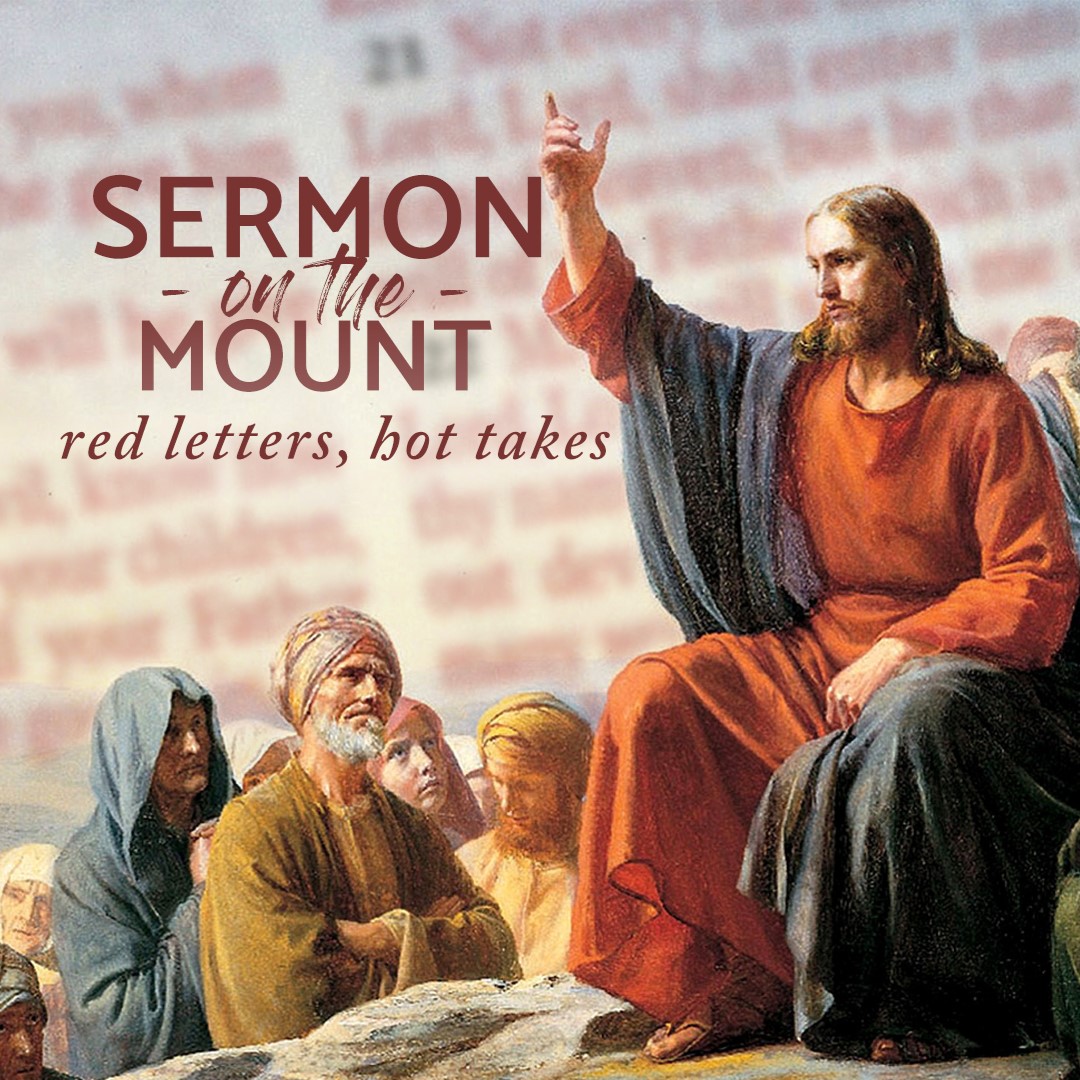
November 2, 2025
Matthew 6:1-4
“Good Deeds, Right Reasons”
Service Overview: Jesus warns against using generosity as a stage for self-promotion. In God’s kingdom, the heart behind the gift matters more than the size of it. Real righteousness is done in secret for the Father, not in public for the spectacle. This passage challenges us to give with humility, integrity, and a heart that seeks heaven’s reward, not human applause.
Memory Verse for the Week:
Matthew 6:3-4 – But when you give to the needy, do not let your left hand know what your right hand is doing, so that your giving may be in secret. Then your Father, who sees what is done in secret, will reward you.
Background & Technical Insights:
- Some almsgiving took place in synagogues and streets, attended by maximum publicity for the donors. It was done with fanfare, because the givers desired a reputation for righteousness. (William E. McCumber, Beacon Bible Expositions, Matthew, 41)
- A hupokritēs (hypocrite) originally was a Greek actor who wore a mask that portrayed in an exaggerated way the role that was being dramatized. For obvious reasons the term came to be used of anyone who pretended to be what he was not. (John MacArthur, New Testament Commentary: Matthew 1-28, 409)
- The phrase “to be seen by them” in Matthew 6:1 comes from an interesting word in the Greek, a word from which we get our word theater. Those who give out of wrong motives are like actors on a stage. They are nothing more than exhibitionists. (Stuart Briscoe, The Sermon on the Mount, 163)
- A hypocrite is basically an actor—consciously or unconsciously. In fact, the classical Greek word, here translated “hypocrite,” originally meant actor. (D.A. Carson, The Sermon on the Mount, 59)
- A hypocrite deliberately uses religion to cover up his sins and promote his own gains. The Greek word translated hypocrite originally meant “an actor who wears a mask.” (Warren Wiersbe, The Wiersbe Bible Commentary, 22)
- In a society without social security or welfare, voluntary charity and donations for the destitute formed a key part of ancient Jewish life and remained an important virtue enjoined upon the righteous. But it was easy to abuse almsgiving by making it plain to others how generous the person was and thus receiving their adulation. (Craig L. Blomberg, Matthew, 120)
- In general, Greeks and Romans did not emphasize personal charity; wealthy contributions to public projects or to clients of slightly lower status were meant to secure the giver’s popularity. In contrast, charity was central to Jewish piety; some writers even said that it saved a person, although some later rabbis’ restrictions technically did not permit one to give over twenty percent above his tithes. (Craig S. Keener, The IVP Bible Background Commentary: New Testament, 74)
What are Jesus’ hot takes about giving that honors God?
- Giving that honors God begins with the right motive.
(v. 1 cf. 1 Sam 16:7; Prov 16:2; Jer 17:10; 1 Cor 4:5; 2 Cor 9:7; Phil 2:3-4; Col 3:23-24)
Jesus has insisted upon good works that can be seen by men (5:16). Here good works performed to be seen of men are condemned. Motive is the differentiating factor. (William E. McCumber, Beacon Bible Expositions, Matthew, 40)
Almsgiving, prayer and fasting were central elements in Jewish religion, and all are assumed to be valid for Jesus’ disciples. The issue is not whether you should do them, but how and why. (D. A. Carson, New Bible Commentary, 912)
Our Giving (6:1–4) Giving alms to the poor, praying, and fasting were important disciplines in the religion of the Pharisees. Jesus did not condemn these practices, but He did caution us to make sure that our hearts are right as we practice them. The Pharisees used almsgiving to gain favor with God and attention from men, both of which were wrong motives (Warren Wiersbe, The Wiersbe Bible Commentary, 22)
- Giving that honors God follows the right manner.
(v. 2 cf. Deut 15:10; Ps 112:5; Prov 19:17; Luke 6:30–36; Acts 20:35; 2 Cor 8:7; Heb 13:16)
Righteousness is something you are and do, not something you show off like a new car. The problem in Jesus’ day was that the ostentatiousness had been accepted as the real thing. (Stuart Briscoe, The Sermon on the Mount, 158)
Although some scholars have argued that people actually blew trumpets during giving in the synagogues, Jesus probably simply uses rhetorical exaggeration to reinforce his point, as when picturing the Pharisees who swallow a camel whole but strain out a mere gnat (Matthew 23:24). Jesus adds to this stark image still another: we should be so secretive in giving that we should not let our left hand know what our right hand is doing (Matthew 6:3; 1 Cor 4:3-5). (Craig S. Keener, IVP New Testament Commentary, Matthew, 127)
- Giving that honors God seeks the right reward.
(vv. 3-4 cf. Luke 14:13-14; 1 Cor 3:13–14; 2 Cor 4:17-18; Heb 11:6; 1 Pet 1:3-4)
When we give to please men, our only reward will be that which men can give. Seeking men’s blessings forfeits God’s. (John MacArthur, Matthew 1-28, 410)
The Pharisees wanted their righteousness to be seen in order to have the praise of people. Jesus is telling His followers to be different—to keep this righteousness hidden. Why? Because a reward in heaven is at stake (R. T. Kendall, The Sermon on the Mount, 186)
Those who give charity to be admired by others, or pray and fast to people rather than to God, already have what they wanted: others’ approval. They will not be rewarded again for their deeds on the day of judgment. (Craig S. Keener, IVP New Testament Commentary, Matthew, 126)
Conclusion: How do we live out what Jesus teaches here?
- We remember to be generous — because Jesus assumes His people will be.
(Deut 15:7–8; Ps 37:21; Prov 11:25; Luke 6:38; Acts 4:34–35; 2 Cor 9:6; 1 Tim 6:18)
Jesus does not introduce this teaching with if but when, indicating it is something He expects us to do. (John MacArthur, Matthew 1-28, 409)
Let us observe that our Lord takes it for granted that all who call themselves his disciples will give alms. He assumes as a matter of course that they will think it a solemn duty to give, according to their means, to relieve the wants of others. The only point he handles is the manner in which the duty should be done. (J. C. Ryle, Expository Thoughts on Matthew, 33)
- We check our motives by asking, “Does my giving point to Jesus or to me?”
(Ps 115:1; Prov 27:2; Matt 5:16; 23:5; Rom 12:1; 1 Cor 10:31; 2 Cor 4:5; Gal 6:14; Col 1:18)
Earlier in the Sermon on the Mount Jesus had specifically commanded, “Let your light shine before men in such a way that they may see your good works, and glorify your Father who is in heaven” (Matt. 5:16). The question is not whether or not our good works should be seen by others, but whether they are done for that end. (John MacArthur, Matthew 1-28, 412)
If we give with the wrong motive, we rob ourselves of blessing and reward and rob God of glory, even though the money we share might help a needy person. Does this mean that it is wrong to give openly? Must all giving be anonymous? Not necessarily, for everyone in the early church knew that Barnabas had given the income from the sale of his land (Acts 4:34–37). When the church members laid their money at the apostles’ feet, it was not done in secret The difference, of course, was in the motive and manner in which it was done. (Warren Wiersbe, The Wiersbe Bible Commentary, 22)
- We pursue the right reward — seeking God’s approval, not human praise.
(Ps 73:25-26; Matt 6:20; Luke 12:33-34; 1 Cor 9:24-25; 2 Cor 5:9-10; 2 Tim 4:7-8)
It is possible to preach like an angel and have no reward. Why? Because it is possible to do all these things for the recognition of men and not of God. (R. Kent Hughes, The Sermon on the Mount, 150)
Jesus reminds us that true piety means impressing God alone—living our lives in the recognition that God knows every thought and deed, and it is his approval alone that matters. Matthew again praises the meek, whose only hope is in God, not in others’ opinions of them. (Craig S. Keener, Matthew, 126)
True religion demands sufficient faith to settle for God’s approval, to do what pleases him no matter what others may think. (Craig S. Keener, Matthew, 128)
Gospel Connection:
Jesus gave Himself (the greatest gift of all) so we can give freely and look with hope toward the reward He has secured in heaven.
(Isa 53:5; John 3:16; Rom 5:8; 2 Cor 8:9; Phil 2:5–8; Tit 2:13–14; Heb 9:12; 1 Pet 1:3–4)
To reconcile us with himself, God sent his Son, Jesus, to die for our sins, that we might be made right with God—or declared righteous. One is not made righteous by doing kind things for people, giving alms, praying, and fasting. Being made righteous is the result of accepting God’s action on our behalf in forgiving sin through the sacrifice of Jesus on the cross. A person who has been made righteous in this way then seeks to act in a righteous way out of the inner resources of his or her relationship to Christ. (Stuart Briscoe, The Sermon on the Mount, 158)
Spiritual Challenge Questions…
Reflect on these questions in your time with the Lord this week, or discuss with a Christian family member or Life Group.
- Why do you think Jesus cared so deeply about the motive behind generosity?
- How can we guard our hearts against the desire to “be seen” in our giving or serving?
- What does it look like to give “in secret” in a culture that often celebrates visibility?
- How do Matthew 5:16 (“let your light shine”) and Matthew 6:1–4 fit together in the Christian life?
- How might understanding heavenly reward change the way you approach giving or serving others?
- What’s a practical way you can reflect God’s generosity this week—without drawing attention to yourself?
HFM @ Home …
Discipleship resources from the Free Methodist and Heidelberg Catechisms, offering historic, Scripture-based teaching to help us grow in our shared faith.
The Heidelberg Catechism
Q10. Does God permit such disobedience and rebellion to go unpunished?
- Certainly not. God is terribly angry with the sin we are born with as well as the sins we personally commit. As a just judge, God will punish them both now and in eternity,1 having declared: “Cursed is everyone who does not observe and obey all the things written in the book of the law.”2 (1 Ex. 34:7; Ps. 5:4-6; Nah. 1:2; Rom. 1:18; Eph. 5:6; Heb. 9:27. 2 Gal. 3:10; Deut. 27:26)
Q11. But isn’t God also merciful?
- God is certainly merciful,1 but also just.2 God’s justice demands that sin, committed against his supreme majesty, be punished with the supreme penalty—eternal punishment of body and soul.3 (1Ex. 34:6-7; Ps. 103:8-9 2Ex. 34:7; Deut. 7:9-11; Ps. 5:4-6; Heb. 10:30-31. 3Matt. 25:35-46)
THE FIRST AFFIRMATION (Of the Creed continued): GOD THE FATHER ALMIGHTY
The Holy Trinity
God has revealed Himself as one and as three. There is one God,35 and in that Godhead three divine Persons, the Father, the Son and the Holy Spirit.36 Hence we refer to the divine Unity revealed in the blessed Holy Trinity.
Each person of the Trinity is wholly and entirely God. The Father is the source of the other Persons, for He begets the Son37 Who came from the Father38 and made the Father known.39 The Father also sends the Spirit through the Son40 Who proceeds from the Father and the Son,41 empowers the church,42 and dwells within Christians.43
Still, the Father, Son44 and Holy Spirit,45 each has the true nature of God; and each is equal to the others in glory, power, wisdom and honor.46 We worship and adore each Person of the Trinity in His separate Person and all in their unity.
This three-oneness, tri-unity, is a mystery. We can understand it only to a limited degree. God alone understands it fully. We believe it because the Scriptures teach us that the three Persons of the Trinity in their unity and in their distinctness have created us and are at work for our salvation.47
35Deut. 6:4; 36Mat. 28:19; 2 Cor. 13:14; 37John 1:14, 18; 38John 5:37; 39Mat. 11:17; John 17:6; 40John 14:26; 41Luke 11:20: John 15:26, 2 Cor. 3:17; 42Acts 1:8; 43Rom. 8:9; 44John 1:1, Heb. 1:8-9; 45Rom. 8:26-27; 46John 5:23; 472 Cor. 3:17
November 2, 2025
Matthew 6:1-4
“Good Deeds, Right Reasons”
Pastor David Turner