
January 4, 2026
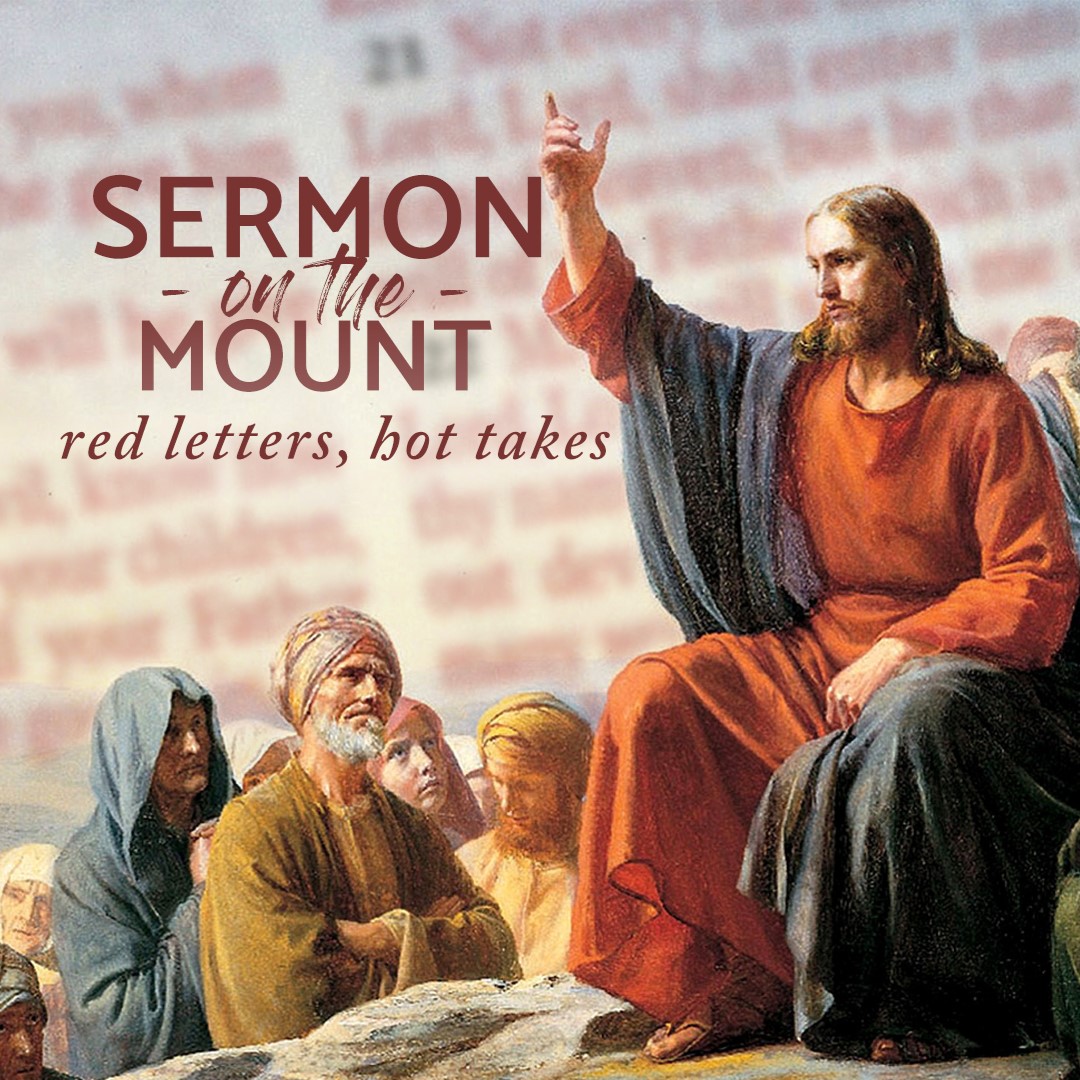
Matthew 7:1-6
“Logs, Specks, and Self-Awareness”
Service Overview: Jesus warns against a judgmental spirit that condemns others while ignoring our own faults. This teaching isn’t a call to moral silence, but to humility and discernment. Before we confront others, we must first examine our own hearts. True correction flows from grace, not arrogance, and discernment must always be guided by love.
Memory Verse for the Week:
Romans 14:10 – You, then, why do you judge your brother or sister? Or why do you treat them with contempt? For we will all stand before God’s judgment seat.
Background & Technical Insights:
- The first portion of these verses is one of those passages of Scripture which we must be careful not to strain beyond its proper meaning. It is frequently abused and misapplied by the enemies of true religion. It is possible to press the words of the Bible so far that they yield not medicine, but poison. (J. C. Ryle, Expository Thoughts on Matthew, 43)
- As with all the other elements of the Sermon on the Mount, the perspective of this passage is given in contrast to that of the scribes and Pharisees, whose hypocritical self-righteousness was in direct opposition to the true righteousness of God (see 5:20). (John MacArthur, Matthew, 492)
- [Judging is] uncalled-for criticism. It is criticism that is either unfair or unjustified. The criticism may be true, but that does not make it right. (R. T. Kendall, The Sermon on the Mount, 327)
- The Greek word that is translated “judge” in Matthew 7:1 is krino. It means “to make a distinction.” Being discriminate can, of course, be a wise thing to do. “The spiritual man makes judgments about all things,” said Paul (1 Corinthians 2:15). But that is not what Jesus means in Matthew7:1. He is talking about our judging people. Pointing the finger is man’s way of playing God. (Kendall, The Sermon on the Mount, 328)
- Judge (krino) often carries the connotation ‘condemn’, and it is in that sense that it is used here. (R. T. France, The Gospel According to Matthew, 144)
- 7:1-2. The idea of a measuring scale (the image is from the ancient marketplace) was used elsewhere for the day of judgment or divine retribution. “As one measures it will be measured back to one” occurs a number of times in later Jewish sources and may have been a maxim. (Craig S. Keener, The IVP Bible Background Commentary: New Testament, 79)
- Jesus declares that the person judging will be judged (v. Matthew 7:1) because judging assumes a divine prerogative; final judgment belongs to God alone, and those who seek to judge others now will answer then for usurping God’s position (see also Matthew 6:12-15). (Craig S. Keener, Matthew, 146)
What does Jesus reject and require when it comes to our view of and interaction with others?
- Jesus rejects condemnation while requiring moral evaluation.
(vv. 1–2 cf. Ps 37:30; Prov 18:13; John 7:24; Rom 14:4; 1 Cor 5:12–13; Gal 6:1; Heb 5:14)
What Jesus clearly meant is that we should avoid judgmental and condemnatory attitudes that are harsh and critical, judgment where we are thinking the worst of someone instead of the best (Luke 6:37-38; 1 Cor. 13:7). (Heath Lambert, Counseling the Hard Cases, 93)
The words of Jesus cannot be construed as a blanket prohibition of judging. No man lives with his critical faculties in suspended animation. Life demands choices, and our decisions are based upon judgments, whether good or bad. (William E. McCumber, Matthew, 45)
Criticism is deadly in its effect because it divides a man’s powers and prevents his being a force for anything. (Oswald Chambers, Studies in the Sermon on the Mount, 82)
- Jesus rejects self-righteousness while requiring self-awareness.
(vv. 3–5 cf. Ps 26:2; Prov 16:18; Prov 21:2; Jer 17:9; Luke 18:9–14; Rom 12:3; 2 Cor 13:5)
There is nothing more ungodly than a critical spirit, and nothing more un-Christlike than the false righteousness that is always looking for something wrong in someone else. (R. Kent Hughes, The Sermon on the Mount, 234)
What Jesus prohibits…is sinful, improper judging. It is the hypocrisy of condemning others but failing to see one’s own glaring sins. Jesus forbids self-righteous criticism, a hypercritical spirit, and a harsh, fault-finding mindset. (Alexander Strauch, Leading With Love, 158)
- Jesus rejects exposing what is holy to contempt while requiring discernment.
(v. 6 cf. Prov 9:7–8; Prov 23:9; Matt 10:14; Acts 13:46; 18:6; 19:9; 1 Cor 2:14; Jude 22–23)
Jesus’ point is that certain truths and blessings of our faith are not to be shared with people who are totally antagonistic to the things of God. Such people are spiritual dogs and swine, who have no appreciation for that which is holy and righteous. They will take that which is holy, the pearls (the rarest and most valuable of jewels; see Matt. 13:45-46) of God’s Word, as foolishness and as an insult. (John MacArthur, New Testament Commentary: Matthew 1-28, 502)
Jesus is obviously not telling his followers not to preach to certain kinds of people, but he does recognize that after sustained rejection and reproach, it is appropriate to move on to others (cf. Paul’s regular practice in Acts—e.g., 13:46; 18:6; 19:9). (Craig L. Blomberg, Matthew, 133)
Conclusion: How does this teaching reshape the way we relate to others and examine ourselves?
- It calls us to examine ourselves before addressing others.
(Ps 139:23–24; Lam 3:40; Luke 6:41–42; 1 Cor 11:28; 2 Cor 13:5; Gal 6:4; Jas 4:8)
The first principle of judgment is that we begin with ourselves. Jesus did not forbid us to judge others, for careful discrimination is essential in the Christian life. (Warren Wiersbe, The Wiersbe Bible Commentary, 25)
Beware of anything that puts you in the place of the superior person. (Oswald Chambers, Studies in the Sermon on the Mount, 82)
Judging another is the easiest thing in the world to do. This is because we are all self-righteous and tend automatically to see the fault in others but not in ourselves (R. T. Kendall, The Sermon on the Mount, 327)
Few things are more exhausting and debilitating than harsh, unloving criticism. (R. Kent Hughes, The Sermon on the Mount, 232)
- It invites us to speak truth with humility and compassion.
(Prov 12:18; Prov 15:1; Prov 25:11; Zech 7:9; Eph 4:15; Col 4:6; 1 Pet 3:15; Jas 3:17)
Like eye doctors, we should minister to people we want to help with tender loving care. We can do more damage than a speck of dirt in the eye if we approach others with impatience and insensitivity. (Warren Wiersbe, The Wiersbe Bible Commentary, 25)
The great characteristic of the saint is humility. We realize to the full that all these sins and others would have been manifested in ourselves but for the grace of God, therefore we have no right to judge. (Oswald Chambers, Studies in the Sermon on the Mount, 86)
- It challenges us to practice discernment without losing love.
(Matt 10:16; John 16:13; Rom 12:9; Phil 1:9–10; Col 1:9–10; 1 Thess 5:21–22; 1 John 4:1)
Grace frees us from having to earn God’s acceptance by meeting others’ expectations, and it also frees us from the unholy pride and prejudice of determining others’ acceptance by God on the basis of our own wisdom. (Bryan Chapell, Holiness by Grace, 120)
You must be more charitable to others than you are to yourself. You have no access to a fellow Christian’s heart. No ability to test his inward devotion to the Lord, which is the all-important matter in using things indifferent. But you can scrutinize your own heart. You can examine your inner man to detect your own motives and aims for every act. (Walter Chantry, The Shadow of the Cross, 41)
Gospel Connection:
The gospel frees us from judgmental pride because Jesus bore the judgment we deserved, removed the log of our sin by His grace, and now teaches us to see others through eyes shaped by mercy.
(Isa 53:4–6; Matt 26:39; Rom 3:23–24; 5:8–9; 2 Cor 5:21; Gal 2:20; Eph 2:4–9; Col 2:13–14; Titus 3:4–7; Heb 4:15–16)
The heart that has tasted the Lord’s grace and forgiveness will always be restrained in its judgment of others. It has seen itself deserving judgment and condemnation before the Lord, and yet, instead of experiencing his burning anger, has tasted his infinite mercy. (Sinclair B. Ferguson, The Sermon on the Mount, 167)
Spiritual Challenge Questions…
Reflect on these questions during your time with the Lord this week, or discuss with your friends, family, or Life Group.
- Why do you think condemning others can feel so natural, even for sincere Christians?
- What are some subtle ways self-righteousness can show up in our lives without us realizing it?
- How does regular self-examination protect us from becoming harsh or hypocritical toward others?
- Can you think of a time when truth was spoken to you in a way that healed rather than hurt? What made the difference?
- Jesus warns against exposing what is holy to contempt. How can we tell the difference between loving persistence and unwise insistence?
- Why is it sometimes difficult to hold discernment and love together instead of drifting toward one extreme?
HFM @ Home 1-4-26
Discipleship resources from the Free Methodist and Heidelberg Catechisms, offering historic, Scripture-based teaching to help us grow in our shared faith.
From The Heidelberg Catechism
Q32. But why are you called a Christian?
- Because by faith I am a member of Christ1and so I share in his anointing.2I am anointed to confess his name,3 to present myself to him as a living sacrifice of thanks,4 to strive with a free conscience against sin and the devil in this life,5 and afterward to reign with Christ over all creation for eternity.6
1 1 Cor. 12:12-27. 2 Acts 2:17 (Joel 2:28); 1 John 2:27. 3 Matt. 10:32; Rom. 10:9-10; Heb. 13:15. 4 Rom. 12:1; 1 Pet. 2:5, 9. 5 Gal. 5:16-17; Eph. 6:11; 1 Tim. 1:18-19. 6 Matt. 25:34; 2 Tim. 2:12
From The FREE METHODIST Catechism
“The Word Became Flesh”86
The Son of God was not always a human being, but He became so at the time of His incarnation.87 For us and for our salvation, He came down from heaven,88 was miraculously conceived by the Holy Spirit as a child in the Virgin Mary89 and was born of her90 in fulfillment of prophecy.91 Thus, the true Son of God assumed a true human nature by taking a human body and a human soul.92 He became like us in all respects, except that He did not sin.93 Because He was a true human and the perfect human, He became the example of goodness and holiness.94
The two natures of Jesus Christ, His deity and His humanity, are united in His one Person:
- without confusion – neither nature compromising the other
- without change – neither nature diminishing the other in its reality
- without division – neither nature being independent of the other
- without separation – neither nature acting independently from the other.
In His incarnation the Son of God took upon Himself true human nature and became our Lord Jesus Christ.95 This is the mystery of the gospel and a great comfort to us sinners.
86 John 1:14. 87 John 1:14. 88 John 3:31; 8:23. 89 Matthew 1:18-25; Luke 1:26-38. 90 Matthew 1:25; Luke 2:5-7; Galatians 4:4. 91 Isaiah 7:14; Matthew 1:22-23. 92 Philippians 2:6-8; see Mark 14:32-41; Luke 2:51-52; Hebrews 5:1-10. 93 Hebrews 4:14-16; see Matthew 4:1-11. 94 Philippians 2:6; Matthew 25:28-30; Mark 8:34. 95 Acts 7:56; 1 Corinthians 15:21-24; Hebrews 2:9-18. 11:38-44.