
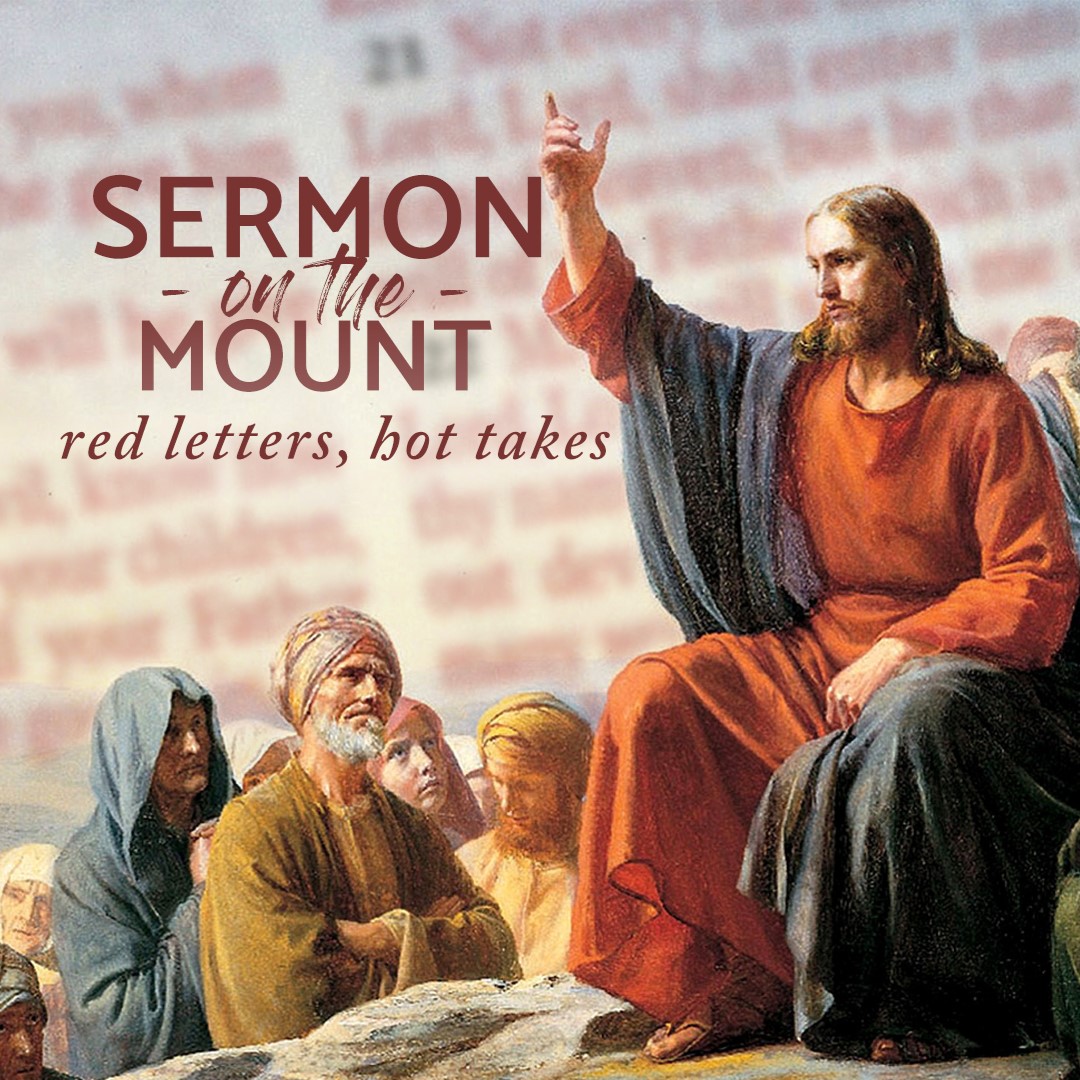
January 18, 2026
Matthew 7:13-23
“Wide Roads and Empty Religion”
Service Overview: Jesus here warns of two paths, two kinds of prophets, and two eternal outcomes. This sobering passage reminds us that not everyone who sounds spiritual is walking the narrow way. Real discipleship bears fruit and does the Father’s will. In a culture of spiritual shortcuts, Jesus calls us to sincerity, obedience, and discernment.
Memory Verse for the Week:
Matthew 7:21 – Not everyone who says to me, ‘Lord, Lord,’ will enter the kingdom of heaven, but only the one who does the will of my Father who is in heaven.
Background & Technical Insights:
- Jesus’ preaching of the Sermon on the Mount is virtually over. When He gave us the Golden Rule, it was a summary of His main teachings—the exposition of the Law and its relationship to the Kingdom of heaven. What follows is application, which refers to how His hearers—and those of us who read His sermon—should respond and live in the light of the teaching. (R. T. Kendall, The Sermon on the Mount, 378)
- The rest of the Sermon on the Mount adds no new commandments but encourages obedience to those already given while warning against disobedience. By three illustrations, Jesus makes plain that there are ultimately only two categories of people in the world, despite the endless gradations we might otherwise perceive. (Craig L. Blomberg, Matthew, 135)
- It is no accident that Jesus placed this text at the beginning of the end of the Sermon on the Mount. He knew that at the end of the Sermon some would stand at the foot of the magisterial immensity of what he taught and praise it and laud it — and yet never enter the kingdom. That is why the opening line of the conclusion is a command: “Enter through the narrow gate.” Jesus’ parallel saying in Luke is, “Strive to enter through the narrow door” (13:24). It is not enough to listen to preaching about the gate. You must enter through it. (R. Kent Hughes, The Sermon on the Mount, 249)
- The Sermon on the Mount provides us with a crushing blow to self-righteousness, and follows it up with an invitation to petition God for favor (7:7-11), without which there can be no admittance to the kingdom. At the same time it sketches in the quality of life of those who do enter, those who petition God (7:7-11), ask for forgiveness (6:12), and who by God’s grace discover not only forgiveness but a growing personal conformity to kingdom norms. It is not long before their own lives begin to sum up the law and the prophets. (D.A. Carson, The Sermon on the Mount, 124)
- In the Sermon on the Mount Jesus presents still again that great choice of choices. This sermon therefore cannot be simply admired and praised for its ethics. Its truths will bless those who accept the King but will stand in judgment over those who refuse Him. (John MacArthur, Matthew 1-28, 516)
How does Jesus help us discern genuine faith from false assurance?
- Genuine faith is revealed by the road chosen.
(vv. 13–14 cf. Ps 1:1–6; Prov 4:18–19; 14:12; Jer 6:16; Luke 9:23; John 14:6; Rom 8:5–6)
True discipleship is a minority position, a matter of deliberately opting out from the mainstream, but it is a matter of life and death. (D. A. Carson, New Bible Commentary, 914)
Here is the appeal to which Jesus has been moving through the whole sermon. He gives the call to decide now about becoming a citizen of God’s kingdom and inheriting eternal life, or remaining a citizen of this fallen world and receiving damnation. The way to life is on God’s terms alone; the way to damnation is on any terms a person wants, because every way but God’s leads to the same fate. (John MacArthur, Matthew, 514)
- Genuine faith is tested by the fruit produced.
(vv. 15–20 cf. Prov 11:30; Matt 3:8; 12:33; John 15:4–8; Gal 5:22–23; Col 1:10)
Jesus is not encouraging a heresy-hunting mentality here. After all, the same Jesus has only recently condemned judgmental attitudes. Yet false teachers must be identified. If they are not recognized immediately by their doctrine, then sooner or later they may be recognized by their lives; for what a man believes must sooner or later manifest itself in what he does. Jesus affirms an indissoluble link between belief and conduct. (D.A. Carson, The Sermon on the Mount, 130)
A professed adherence to Jesus and his teaching may be very impressive so as to deceive others, and even the professed disciple himself, but Jesus here gives warning that it will not deceive God, who looks for practical results. The teaching of the Sermon on the Mount is not meant to be admired but to be obeyed. (R. T. France, The Gospel According to Matthew, 148)
- Genuine faith is confirmed by obedience to the Father’s will.
(vv. 21–23 cf. 1 Sam 15:22; Matt 12:50; John 14:15; Rom 6:16–18; 1 John 2:3–6)
All true Christians say, “Lord, Lord.” But not all who say “Lord, Lord” are true Christians! Intellectual orthodoxy does not indicate saving faith. You can be absolutely correct in your belief about Christ’s nature and person, his substitutionary atonement, his resurrection, and his return, you can have even fought against heretics, and yet not be truly saved. (R. Kent Hughes, The Sermon on the Mount, 259)
Profession is easy, and even Christian behaviour may be counterfeited, but what a man really is will inevitably show itself by the way he lives. (R. T. France, The Gospel According to Matthew, 149)
Conclusion: In light of Jesus’ teaching, how should we respond if we want a faith that is real and lasting?
- Examine the road we’re walking.
(Ps 26:2; 139:23–24; Prov 4:26; Luke 13:3; 2 Cor 13:5; Gal 6:7–8; Phil 2:12–13; Heb 12:1)
If we live in a society producing believers who never bother to think through to what they really believe and why they believe it, then we are a part of a society that is headed for oblivion. (Stuart Briscoe, The Sermon on the Mount, 190)
Eternal life is not something you get when you die if you have been good enough. Eternal life is maturity now—being and doing what God calls us to be and do now! Once you have taken that step of faith, you have been invaded by the resurrection life of Jesus himself. Jesus Christ is alive and well in the lives of committed Christians! (Stuart Briscoe, The Sermon on the Mount, 191)
- Allow grace to produce real change, not chasing perfection but transformation.
(Ezek 36:26–27; Rom 2:4; 12:1–2; 2 Cor 3:18; Gal 2:20; Phil 1:6; Col 1:10; Titus 2:11–14)
Being a true Christian means there has been a radical change in the depth of the person through the grace of God. There is an awesomely deep connection between what comes out of us and what we are. The essence of the trees determines the fruit they produce. (R. Kent Hughes, The Sermon on the Mount, 255)
The fruit the Lord Jesus looks for is a life in growing conformity to the norms of the kingdom: righteousness, transparent humility, purity, trusting and persistent prayerfulness, obedience to Jesus’ words, truthfulness, love, generosity, rejection of all that is hypocritical. It may take time for the test to prove very helpful; but where doctrinal aberration cannot be detected immediately and unequivocally, the “fruit test” is eventually a safe guide. (D.A. Carson, The Sermon on the Mount, 131)
God demands of us our utmost in working out what He has worked in. We can do nothing towards our redemption, but we must do everything to work it out in actual experience on the basis of regeneration. (Oswald Chambers, Studies in the Sermon on the Mount, 101)
- Ask where obedience to Jesus still feels optional.
(Jer 7:23; Matt 6:24; Luke 6:46; 9:23; John 14:21; Rom 6:16; 12:11; Jas 1:22; 1 John 5:3)
What is the narrow way? It is a way of conflict. It means a fight, a struggle. It means to overcome the world, flesh and the devil. It means overcoming temptation. It means to forgive rather than hold a grudge. It means to be sexually pure as opposed to falling into sexual sin. It means to respect God’s name and not use His name to increase your own credibility. It means to live a life of not judging and pointing the finger. It also means not looking over your shoulder to be seen of men, to be in fear of what people think. It means to put personal integrity above the approval of people, to be willing to face persecution, however fierce. In a word: The narrow way is a way of conflict. (R. T. Kendall, The Sermon on the Mount, 381)
Gospel Connection:
In the end, genuine faith is not secured by our performance, but by trusting the One who obeyed perfectly and who graciously invites us into a new and better life in Him.
(Isa 53:5–6; Matt 5:17; Rom 5:18–19; 8:1–4; 2 Cor 5:21; Gal 2:16; Phil 3:8–9)
You will never go through the narrow gate by accident or unawares. You must enter it thoughtfully and purposely. Have you done so? You must decide. No one else can do it for you. (R. Kent Hughes, The Sermon on the Mount, 249)
It is true, of course, that no man enters the kingdom because of his obedience; but it is equally true that no man enters the kingdom who is not obedient. It is true that men are saved by God’s grace through faith in Christ; but it is equally true that God’s grace in a man’s life inevitably results in obedience. Any other view of grace cheapens grace, and turns it into something unrecognizable. (D.A. Carson, The Sermon on the Mount, 133)
Spiritual Challenge Questions…
Reflect on these questions during your time with the Lord this week, or discuss with your friends, family, or Life Group.
- When Jesus speaks about the narrow road and the wide road, what do you think He is getting at practically, not just theologically?
- How can someone sincerely believe they are following Jesus and still end up with false assurance?
- Jesus says fruit reveals the nature of the tree. What kinds of fruit does Scripture consistently point to as evidence of genuine faith?
- What is the difference between chasing spiritual perfection and allowing grace to produce real transformation?
- Why do you think obedience sometimes feels optional in certain areas of our lives?
- After hearing this passage, what is one small, faithful step of obedience or trust you sense God inviting you to take this week?
HFM @ Home
Discipleship resources from the Free Methodist and Heidelberg Catechisms, offering historic, Scripture-based teaching to help us grow in our shared faith.
From The Heidelberg Catechism
Q35. What does it mean that he “was conceived by the Holy Spirit and born of the virgin Mary”?
- That the eternal Son of God, who is and remains true and eternal God,1took to himself, through the working of the Holy Spirit,2from the flesh and blood of the virgin Mary,3 a truly human nature so that he might also become David’s true descendant,4 like his brothers and sisters in every way5 except for sin.6
1 John 1:1; 10:30-36; Acts 13:33 (Ps. 2:7); Col. 1:15-17; 1 John 5:20. 2 Luke 1:35. 3 Matt. 1:18-23; John 1:14; Gal. 4:4; Heb. 2:14. 4 2 Sam. 7:12-16; Ps. 132:11; Matt. 1:1; Rom. 1:3. 5 Phil. 2:7; Heb. 2:17. 6 Heb. 4:15; 7:26-27
From The FREE METHODIST Catechism
“With the Help of Wicked Men [They] Put Him to Death”105
Though the people heard Jesus gladly,106 Jewish leaders began to plot His death from early in His ministry.107 They rejected108 Him because:
- some of His teaching contradicted their teaching109
- His influence over the people made them envious110
- He assumed divine authority in such things as forgiving sins.111
These leaders seized Jesus, convicted Him of blasphemy because He claimed to be the Son of God,113 turned Him over to the Roman governor, Pilate, and charged Him with leading a rebellion against Rome.115 Though Pilate believed Jesus was innocent, he yielded to the pressure,117 had Him whipped and humiliated118 and finally crucified as the King of the Jews.119 Thus, the whole of the world – Jews and Gentiles alike – participated in having Him put to death.
105 Acts 2:23. 106 Mark 1:33; 2:1-2, 13; 3:7-8; 4:1; 5:21, 24; John 12:17-19. 107 Mark 3:6. 108 Psalms 118:22; Isaiah 53:3; Acts 4:11; 1 Peter 2:7. 109 Matthew 9:9-17; 12:1-14; Mark 10:1-9; 12:18-23. 110 Matthew 27:18; Mark 15:10. 111 Matthew 21:33-36; 22:41-46; Mark 2:5-11; Luke 4:13-30; John 8:48-59. 113 Matthew 26:63-66; Mark 14:61-64; Luke 22:70-71; 1 Timothy 6:13. 115 Luke 23:2-3, 5; John 19:12. 117 Mark 15:15; Luke 23:23-24. 118 Matthew 27:28-31; Mark 15:17-20; John 19:1-3. 119 Matthew 27:35, 37; Mark 15:24, 26; Luke 23:33, 38