
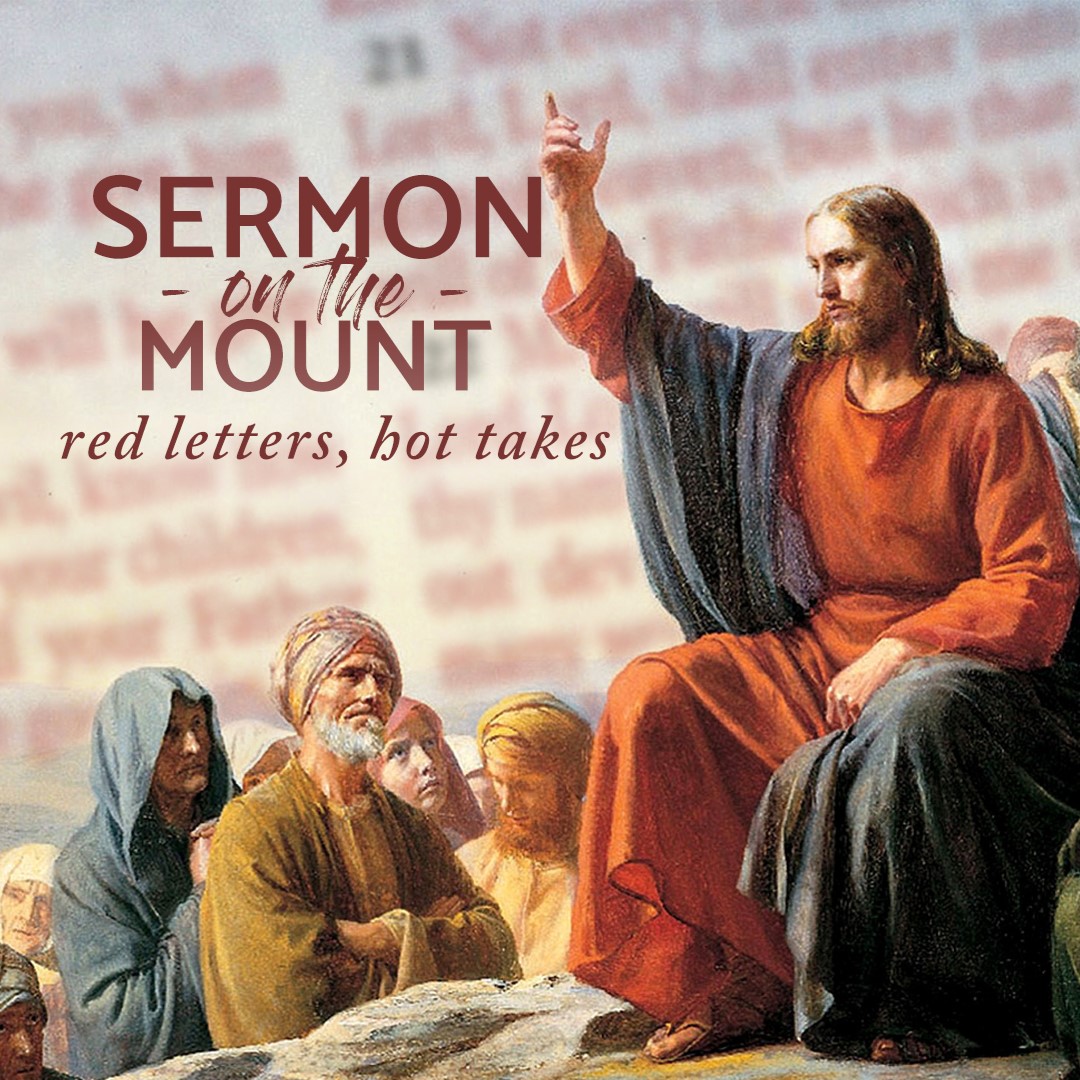
January 11, 2026
Matthew 7:7-12
“Ask. Seek. Knock.”
Service Overview: Jesus invites us into confident, persistent prayer, reminding us that God is not reluctant but responsive; a generous Father who delights in giving good gifts. This teaching not only shapes how we pray but how we treat others, linking bold dependence on God with a life marked by mercy and empathy.
Memory Verse for the Week:
James 1:5 – If any of you lacks wisdom, you should ask God, who gives generously to all without finding fault, and it will be given to you.
Background & Technical Insights:
- In this part of the Sermon on the Mount our Lord begins to draw his discourse to a conclusion. The lessons he here forces on our notice are broad, general and full of the deepest wisdom. Let us mark them in succession. (J. C. Ryle, Expository Thoughts on Matthew, 45)
- Let’s remember that in the Sermon on the Mount Jesus is calling for his followers to live according to a distinctive lifestyle, guided by a distinctive philosophy rooted in the eternal Word of God. One of the tensions we encounter as Christians is the constant bombardment of conflicting philosophies in total opposition to the truth as we know it in the Bible. And one of our biggest problems in this topsy-turvy world is to recognize our priorities. (Stuart Briscoe, The Sermon on the Mount, 179)
- Jesus’ argument is a fortiori: If human fathers, who by God’s standards of perfect righteousness can only be described as evil, know how to give good gifts to their children, how much more will God give good gifts to them who ask him? We are dealing with the God who once said to his people, “Can a mother forget the baby at her breast and have no compassion on the child she has borne? Though she may forget, I will not forget you!” (Isa. 49:15). (D.A. Carson, The Sermon on the Mount, 113)
- Jesus uses the familiar Jewish method of arguing by a “how much more” analogy. God who gives good gifts to children may not give everything every child asks, but he will not withhold his gifts from those who desire and seek what is right (Ps 37:4; 84:11). (Craig S. Keener, Matthew, 151)
- Here is the conclusion of the main theme of the Sermon on the Mount, which is to give the standards for kingdom living. Jesus has given the standards related to self, to morality, to religion, and to money and possessions. Here He concludes giving the standards related to human relationships begun in verses 1-6. (John MacArthur, New Testament Commentary: Matthew 1-28, 505)
- This is the so-called “Golden Rule,” one of the most misunderstood statements in the Bible. This statement is not the sum total of Christian truth, nor is it God’s plan of redemption. We should no more build our theology on the Golden Rule than we should build our astronomy on “Twinkle, Twinkle Little Star.” (Warren Wiersbe, The Wiersbe Bible Commentary, 26)
What kind of disciple is Jesus attempting to cultivate through this teaching?
- One who prays with persistence, not hesitation.
(vv. 7–8 cf. Deut 4:29; Ps 34:17; Jer 29:12–13; Luke 11:8–9; 18:1; Rom 12:12; Col 4:2)
Jesus is driving his point home, and the point is this: We are to passionately persist in prayer. (R. Kent Hughes, The Sermon on the Mount, 239)
Persistence in prayer (the imperatives are all in the present tense, which suggests continuous asking, seeking and knocking, not just a single request) can expect an answer not because of the technique used but because of the God who is being addressed. (D. A. Carson, New Bible Commentary, 913)
So confident of God does Jesus want His disciples to be, that the asking-seeking-knocking action and the receiving-finding-opening result are repeated for the sake of emphasis. The one is as sure as the other. The power that responds to prayer is as constant as the need that prompts to prayer. (McCumber, Matthew, 47)
- One who seeks God, not just outcomes.
(vv. 9–11 cf. Prov 3:5–6; Isa 55:8–9; Hos 6:3; Matt 6:33; John 6:26–27; Phil 3:8; James 4:3)
This asking is an asking for the virtues Jesus has just expounded; this seeking is a seeking for God; this knocking is a knocking at heaven’s throne room. It is a divinely empowered response to God’s open invitation: “You will seek me and you will find me when you search for me with all your heart” (Jer. 29:13). (D.A. Carson, The Sermon on the Mount, 111)
To be sure that our prayer will be answered, two conditions must precede. First is that what we want is what God wants. This is what is meant by the will of God. It is also what is meant by wanting more of God (R. T. Kendall, The Sermon on the Mount, 363)
- One whose life reflects God’s mercy.
(v. 12 cf. Lev 19:18; Ps 103:8; Mic 6:8; Luke 6:31, 36; Eph 4:32; Col 3:12–13; James 2:13)
If we claim to be God’s children, God’s nature should be reflected in our lives, imperfect as they still are. (John MacArthur, Matthew 1-28, 509)
We are not to deal with others as others deal with us: this is mere selfishness and heathenism. We are to deal with others as we would like others to deal with us—this is real Christianity. (J. C. Ryle, Expository Thoughts on Matthew, 45)
We are not accepted by God because of anything that we do. We are accepted by God completely and totally because of a perfect Savior who has died a bloody death in our place and who has risen again in victory. Yes, we pray for our enemies, we love those who persecute us, and we follow the Golden Rule. But we do these things not in order to earn acceptance before our God, but because we have acceptance by God and we want to glorify Him in everything that we do. (David Platt, Exalting Jesus in Matthew, 105)
Conclusion: What does living as this kind of disciple look like?
- Coming to God humbly, honestly, and persistently.
(Ps 34:18; Prov 15:29; Isa 66:2; Jer 29:12–13; Luke 11:9–10; Heb 4:16; 1 Pet 5:6–7)
We knock to get the attention of one on the other side of the door. Why do we knock on the door to get God’s attention? It is because God requires it. We must never underestimate what a privilege prayer is. We must never take for granted the inestimable joy that is on the other side of the door—when it opens. (R. T. Kendall, The Sermon on the Mount, 359)
Persistence is required. But persistence in what? The answer is persistence in prayer—not prayer envisaged as an occasional pious request for some isolated blessing, but, in the context of the Sermon on the Mount, prayer that is a burning pursuit of God. (D.A. Carson, The Sermon on the Mount, 110)
- Trusting God’s definition of what is good.
(Ps 84:11; Ps 119:68; Prov 3:5–6; Isa 55:8–9; Rom 8:28; 2 Cor 12:9; Heb 12:10; James 1:17)
This is not, of course, a guarantee that any prayer we care to offer will be successful; God gives only good gifts, which may not correspond to our ideas of what we should have! (D. A. Carson, New Bible Commentary, 913)
Often our prayers are not answered as originally desired because we do not share God’s perspective in knowing what is ultimately a good gift for us. We are especially tempted to think of the values of this world (e.g., health and wealth) rather than spiritual values. Not surprisingly, the parallel passage in Luke uses synecdoche to replace “good gifts” with “the Holy Spirit” (Luke 11:13)—the preeminent example of a good and perfect gift coming down from above.” (Craig L. Blomberg, Matthew, 134)
The paradox of answered prayer is that God will ensure that any prayer prayed in His will will be answered. (R. T. Kendall, The Sermon on the Mount, 362)
- Allowing prayer to shape how we treat others.
(Prov 19:17; Matt 5:7; 6:12; Luke 6:36; Eph 4:32; Phil 2:3–4; Col 3:12–13; James 3:17)
The perfect love of the heavenly Father is most reflected in His children when they treat others as they themselves wish to be treated. (John MacArthur, New Testament Commentary: Matthew 1-28, 511)
Humility and holiness always go together. Whenever hardness and harshness begin to creep into the personal attitude towards another, we may be certain we are swerving from the light. (Oswald Chambers, Studies in the Sermon on the Mount, 92)
Gospel Connection:
Because of Jesus, the door is open, the Father is near, and we are invited to come.
(Isa 53:5–6; John 1:12; John 14:6; Rom 5:1–2; 8:15–17; 2 Cor 5:18–19; Eph 2:13–18; Heb 10:19–22; 1 Pet 3:18; Rev 3:20)
We are likewise men and women of God by God’s grace, and as we dare to believe that and to live according to the relationship our Father has given us with himself in Christ, that confidence will transform our prayer lives. (Keener, Matthew, 150)
We shall never really understand the wonder of his grace until, seeking mercy like beggars before a judge, we discover that he wants us to be his sons and daughters. (Sinclair B. Ferguson, The Sermon on the Mount, 171)
Spiritual Challenge Questions…
Reflect on these questions during your time with the Lord this week, or discuss with your friends, family, or Life Group.
- Which of the three words—ask, seek, or knock—best describes your current prayer life? Which one feels hardest for you right now?
- What do you think causes hesitation in prayer for many believers? Fear of disappointment, uncertainty about God’s will, past unanswered prayers, or something else?
- What’s the difference between seeking God and seeking outcomes in prayer? How can you tell when your prayers drift toward one more than the other?
- Can you think of a time when God’s definition of “good” turned out to be better than what you were originally asking for? What did that season teach you about trust?
- Jesus connects prayer to how we treat others in the Golden Rule. Why do you think He makes that connection here? What would it look like this week to let prayer shape one specific relationship in your life?
HFM @ Home
Discipleship resources from the Free Methodist and Heidelberg Catechisms, offering historic, Scripture-based teaching to help us grow in our shared faith.
From The Heidelberg Catechism
Q33. Why is he called God’s “only begotten Son” when we also are God’s children?
- Because Christ alone is the eternal, natural Son of God.1We, however, are adopted children of God—adopted by grace through Christ.2
1 John 1:1-3, 14, 18; Heb. 1. 2 John 1:12; Rom. 8:14-17; Eph. 1:5-6
Q34. Why do you call him “our Lord”?
- Because—not with gold or silver, but with his precious blood1— he has set us free from sin and from the tyranny of the devil,2and has bought us, body and soul, to be his very own.3
1 1 Pet. 1:18-19. 2 Col. 1:13-14; Heb. 2:14-15. 31 Cor. 6:20; 1 Tim. 2:5-6
From The FREE METHODIST Catechism
“He Went About Doing Good”96
After He had been baptized97 and had reached maturity as a man,98 our Lord Jesus Christ began a public ministry.99 He:
- gathered disciples who later became the apostles of the church100
- taught the truth of God and so gave us the words of life101
- healed the sick,102 raised the dead,103 and delivered those oppressed by the devil.104
96 Acts 10:38.
97 Matthew 3:13-17; John 1:29-34.
98 Luke 3:23.
99 Acts 10:37-38.
100 Matthew 4:18-22; Mark 3:13-19; Acts 1:1-2; 2:42.
101 Matthew 5:1-2; Mark 4:1-2; John 6:68.
102 Matthew 8:1-15; Mark 2:1-12; John 9:1-7.
103 Mark 5:21-24, 35-43; Luke 7:11-15; John
104 Mark 1:23-27; 9:14-29; Luke 8:26-39.