
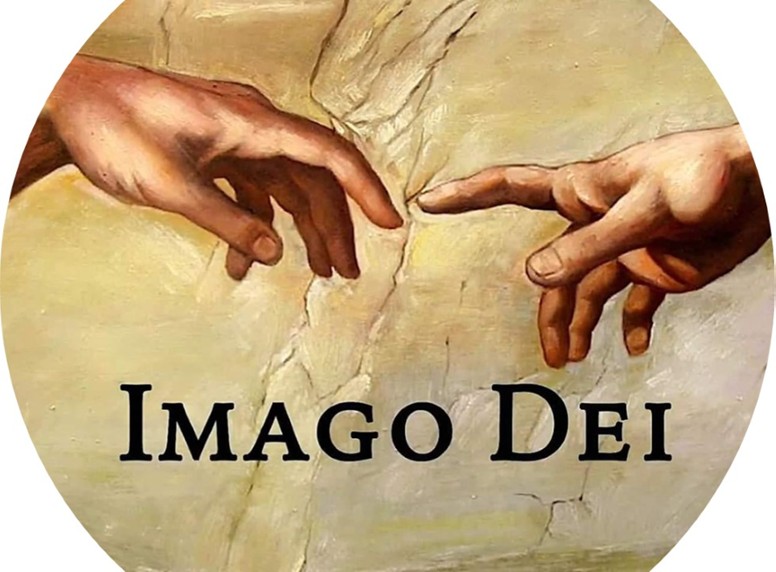
Imago Dei Series
Message for the Hillsdale Free Methodist Church
April 26th, 2026
Message Text: Genesis 2:15-24
“God’s Likeness”
Service Orientation: Humans were created in God’s likeness and image. This includes traits that make us distinctively human. It also includes all sorts of divine expectations from us.
The Word for the Day: Likeness
Man was to use his God-given creativity and reasoning power to rule and take dominion of the universe and to bring it into more complete and full productivity, beauty, and security. All the while using his God-given knowledge and innate consciousness of Who God is and what He is like, to do all that he does in cooperation and congruency with God’s will. Man was to be righteous (doing what is right) and good because God is righteous and good and all that God had created was good. — PK ID, 48
Memory Verse: Then God said, “Let us make man in our image, in our likeness, and let them rule over the fish of the sea and the birds of the air, over the livestock, over all the earth, and over all the creatures that move along the ground.” — Genesis 1:26
What makes humans like God and in His image?:
I- Rationality (Gn 1:26-28; 2:7; 9:6; Ps 8; Mt 22:37; Mk 12:30; Lk 10:27; 1 Cor 2:16; Jam 3:9)
Of all the creatures in the physical world, only human beings share with God the ability to reason. It is not surprising, then, that when theologians discuss aspects of the image of God, reason almost always tops the list. From the perspective of our calling as stewards of the world, reason is one of the most important tools we have been given. (Glen Sunshine, The Image of God, 45)
It is the ground of man’s capacity for rising to general truths, and of framing such highest ideas as infinity, eternity, God, duty, religion. This power, almost every psychologist will acknowledge, the animals do not possess. It belongs to that true, self-conscious rationality in which man is the image of God. (James Orr, God’s Image in Man, 64)
Man, in virtue of this endowment, allying him with his Maker, is, as the animals are not, a personal, self-conscious being; capable of conceptual thought, of rational speech, of education, of development, of progress; capable also, therefore of moral, self-regulated life. The enormous difference of potentiality involved in all this points to a distinct cause, and puts a gulf between man and the animals which no evolutionary theory has proved itself capable of bridging. (James Orr, God’s Image in Man, 146-7)
Our ability to reason can come from one of only two places: either our ability to reason arose from preexisting intelligence, or it arose from mindless matter. The atheists/Darwinists/materialists believe, by faith, that our minds arose from mindless matter without intelligent intervention. We say it is by faith because it contradicts all scientific observation, which demonstrates that an effect cannot be greater than its cause. You can’t give what you haven’t got, yet materialists believe that dead, unintelligent matter has produced intelligent life. This is like believing that the Library of Congress resulted from an explosion in a printing shop!
It makes much more sense to believe that the human mind is made in the image of the Great Mind–God. . . . Materialism cannot explain reason any more than it can explain life. Materialism is just not reasonable. (Norman L. Geisler & Frank Turek, I Don’t Have Enough Faith to Be an Atheist, 130)
II- Creativity (Ex ch 28; 31:1-3; Isa 65:2; 66:18; Ezek 13:2, 17; Eph 3:20)
Man is made in the image of his Creator and has an urge toward creative activity. When he left the Garden his creative urge did not leave him. He must build, always build; his materials may be brick, paint, musical notes, scientific data, systems of thought; but always he must build, from the boy that builds a toy to the man that builds an empire. (A.W. Tozer, Man: The Dwelling Place of God, 117)
Language is, of course, a characteristic of God Himself. He spoke the universe into existence, and Jesus is described in John 1 as the word of God. Our use of language is thus another reflection of the image of God, particularly when we use words to create. (Glen Sunshine, The Image of God, 42)
Strictly utilitarian societies can be productive and efficient but are, in the end, unsustainable. The Communist experiment of the Soviet Union is an example of what happens when a society is built upon a wrong understanding of the human person. When creativity and imagination are suppressed and individuality rejected, the result is widespread dehumanization. (John Stonestreet, “Boredom Is Not Always a Bad Thing,” Breakpoint Daily, October 25, 2023)
The use of human creativity and ingenuity to heal keeps with our status as co-creators with God. Obviously, the difference between our creative powers and God’s is literally infinite. But, part of being created in God’s image is the ability to use our creativity to care for creation including ourselves.
In contrast, using biotechnology to enhance humans, or even to create super humans, is an attempt to usurp God-as-Creator. We seek to create ourselves in our image instead of conforming to God’s intentions for us. (John Stonestreet, Healing, Not Enhancing: Drawing Lines in Medical Ethics, Breakpoint Daily, April 29, 2019)
III- Dominion (Gn 1:26-28; 2:19-20; 9:2-3; Ps 8; Dan 2:38-39; Gal 5:22-23; Heb 2:7-8; 2 Pt 1:5-7)
In the Biblical Creation Mandate God endows mankind with His likeness and image and then places him as co-regent over all the Universe. Man is to have dominion over all of creation managing it as God would manage it.
It is implied by the text, that God did not fully complete Creation; but made it good so as to be able to allow man to use his reason, creativity and dominion in order to better cultivate, shape, manage and build to make planet earth and all the Universe an even better place for mankind to glorify God by his involvement in Creation. —PK ID, 58
The Creator is glorified when the possibilities of his creation are realized and developed by human enterprise, provided that this is done responsibly, in a way that benefits others. (J. I. Packer, Knowing Man, 23-4)
God says He is going to create humanity in His image, and then elaborates on what that means by indicating that we are to have “dominion” over fish, birds, livestock, and all the earth.
At this point, a lot of Christians get nervous, because we know from history how tyrannical royalty can be. “Dominion” easily turns into domination and abuse. And in fact, Christians have been regularly accused of using this verse as an excuse for everything from strip mining and plundering resources to pollution.
In response, we must recognize that in the ancient near east, royal authority came from a God and thus was exercised in the God’s name and under the God’s authority. This is especially true in Genesis. True, we are given authority, but it is the authority of a steward, not of an independent monarch. (Glen Sunshine, The Image of God, 8)
We humans still have within ourselves a drive to conquer what God once gave us to rule. Think about it. Humans try to climb the highest mountain “because it’s there.” They launch rockets into space to walk on the moon. They map every bay and peninsula, every island and fjord, every river and wasteland, to satisfy a hard-wired curiosity. They dive deeper and deeper into the depths of the oceans to find just one more unknown species. We have a built-in drive that says, “Exercise dominion.” The desire is still there. But the ability? Damaged. (Charles R. Swindoll, Swindoll’s Living Insights: Hebrews, 40)
We have perverted the Dominion Mandate: We’ve turned from bringing our environment under God’s plan and purpose, to manipulating it for ours. (Buddy Briggs; 8-9-20 HFM Take-Home Page)
Man is to “have dominion” and this includes dominion over his own body. He is to rule and not be ruled by bodily appetite, urge, or impulse. Of course, it is not simply over the physical body that he is to have dominion. It is over himself. Man is to be under control. It is not without significance that “self-control” is included in “the fruit of the Spirit” (Gal 5:22). (Frank Stagg, Polarities of Man’s Existence in Biblical Perspective, 40)
Our “kingdom” is simply the range of our effective will. Whatever we genuinely have the say over is in our kingdom. And our having the say over something is precisely what places it within our kingdom. In creating human beings God made them to rule, to reign, to have dominion in a limited sphere. Only so can they be persons.
Any being that has say over nothing at all is no person. We only have to imagine what that would be like to see that this is so. Such “persons” would not even be able to command their own body or their own thoughts. They would be reduced to completely passive observers who count for nothing, who make no difference. (Dallas Willard, The Divine Conspiracy, 21-22)
IV- Morality (Eccl 3:11; Rom 2:12-16)
Man has something in him that makes him sit in judgment as to the rightness or the wrongness of deeds and attitudes–whether his own or those of his fellows. As far as we can know, man has never occurred anywhere or at any time without such an internal mentor. Man is indeed and by definition a moral creature.
In the Christian view of man this moral quality is definitive of man. It is also unique in that it occurs nowhere else; no lower animal has been thus endowed. (Leonard Verduin, Somewhat less than God: The Biblical View of Man, 49)
It is in regard to human morals or ethics that the great divide between Darwinists, naturalists, and materialists find themselves separated from people of faith. For those who find themselves explaining their origin in purely materialistic terms have no transcendent basis by which to establish, promote, or determine moral values and behavior. Only people of faith who trust in a transcendent God, Who has revealed these values to mankind has the authority and basis for universal obligation and obedience from mankind. — PK ID, 64
Even the secular philosopher, Immanuel Kant, went to great pains to prove this point, that there is a sense of rightness in the breast of every human being. Human behavioral patterns, no matter how primitive the culture, bear witness to the fact that man is born with some sense of moral awareness. We all have some built-in understanding of what is right and what is wrong. God gives us that innate or inward knowledge of morality. (RC Sproul, The Gospel of God: Romans, 53)
. . . it is well to be reminded that God’s revealed law stands related to us human beings as the owner’s manual stands related to our cars. You need not read the manual, or take any notice of what it says–but you can expect your car to give trouble if you handle it differently from the way the manual directs. And we can expect our human nature, which was designed to operate in obedience to God’s law and experience freedom and fulfilment, contentment and joy in so doing, to give a vast amount of trouble if we break the bounds and use or, rather, misuse our humanity in a different way. (J. I. Packer, Knowing Man, 25-6)
V- Community (Gn 2:18; 3:18; Prv 27:17; Eccl 4:11-12; Isa 64:7; Mt 19:19; Phil 2:3-4 + “one another” texts)
After all, we were created in the image of a God who has reveled for all of eternity in a mysterious from of interrelationship among the Father, Son, and Holy Spirit. So this concept of community has its origin in the Godhead. It’s appropriate, then, that shortly after God created the first person, he concluded, “It is not good for the man to be alone.” Man needed someone to share his life with. (Lee Strobel; God’s OUTrageous Claims, 121)
Persons reach their full development only in community with others. No matter how highly developed in himself or herself, a totally isolated person, cut-off from others, is regarded as something of a monster. In parallel, a community that refuses to recognize the autonomy of individual persons often uses individuals as means to “the common good,” rather than treating persons as ends in themselves. Such communities are coercive and tyrannical. (Michael Novak, “A New Vision of Man”, Michael Bauman, God and Man: Perspectives on Christianity in the 20th Century, 65)
God made us to live in society–as John Donne said, no man is an island. Life is relationships, and we can only live fully human lives in fellowship with other people, in family, church, civil community, clubs, friendships and so on. (Packer, 30)
Socially isolated human selves prove to be emaciated selves and underdeveloped persons. Rich, interactive communication among persons is that which gives rise to and sustains robust personhood. (Christian Smith, What is a Person?, 68)
In each of my friends there is something that only some other friend can fully bring out. By myself I am not large enough to call the whole man into activity; I want other lights than my own to show all his facets. Now that Charles is dead, I shall never again see Ronald’s reaction to a specifically Caroline joke. Far from having more of Ronald, having him “to myself” now that Charles is away, I have less of Ronald. Hence true Friendship is the least jealous of loves. Two friends delight to be joined by a third, and three by a fourth, if only the newcomer is qualified to become a real friend. . . . In this, Friendship exhibits a glorious “nearness by resemblance” to Heaven itself where the very multitude of the blessed (which no man can number) increases the fruition which each has of God. For every soul, seeing Him in her own way, doubtless communicates that unique vision to all the rest. That, says an old author, is why the Seraphim in Isaiah’s vision are crying “Holy, Holy, Holy” to one another (Is 6:3). The more we thus share the Heavenly Bread between us, the more we shall all have. (C. S. Lewis, The Four Loves, 61-2)
Worship Point: God designed us with similar divine attributes so we could love Him and worship Him with all our heart, mind, soul, and strength. Anything less is not good in the philosophical use of the word “good.”
Man, we may conclude, is a creature endowed with the power of speech, a creature capable of predication. And he is for that reason speech-related to all other human beings, so that it is hard for human beings to be human toward people with whom they cannot exchange predication. Because man is a creature of speech, his relationship to his Maker is likewise speech-related, so that the very idea of personal relationship between the two is dependent upon communication between them. (Verduin, 123-4)
Gospel Application: Jesus proved to be the ultimate example of what it means to be human by loving, worshiping and obeying God with all His heart, mind, soul, and strength. Look to Jesus. (Mt 26:39-42; Mk 14:36; Lk 22:42; Jn 4:30-34; 17:1-4; Heb 12:2; 1 Jn 3:2)
The fall of man may be seen as the rejection of God’s sovereign rule and the assertion by man (Adam) of himself in independence of God. Thus it may be seen as loss of “dominion” on the part of man in the very act of trying to seize it. Viewed in another light, this grasping for power is the opposite of the love which God is and the love which by commandment is to be the law of our lives. The cross, on the other hand, is the ultimate in love, radical self-denial and self-giving. It is only through “dying with Christ” that we begin identifying with the kind of existence that God has (Rom 6:3-11; Gal 2:20). The loss of love, then, is the loss of the image of God, and the recovery of love is the recovery of that image. (Frank Stagg, Polarities of Man’s Existence in Biblical Perspective, 22)
Spiritual Challenge: Begin to think of the ways you can glorify God and worship Him with all of the mental acuity, creative abilities, areas of dominion, moral aptitude, and relational connections you possess. (Dt 6:5; 10:12; 11:13-14; 26:16; 30:2, 10-11; Josh 22:5; 1 Sm 12:24; Mt 22:37; Mk 12:30)
For God and for man dominion is exercised through the love that serves even to the point of radical sacrifice. If the image of God has to do with man’s having dominion even as God has dominion, in the final analysis this dominion is that of triumphant love. . . . The ultimate dominion for God and for man is that of love–persuasive power but not coercive power. God’s dominion is not tyranny over man nor nature. Man’s proper dominion is never tyranny but that of the power of responsible love. (Stagg, 23-4)
Reality ☞ Identity ☞ Action — Dr. David Diener
Living out our identity in a way that aligns with reality reflects the character of God. — Dr. David Diener
So What?: You will never begin to feel or think you are fully alive unless or until you begin to be all God created you to be in His likeness and image. (Prv 3:5-6; Jn 10:10; 1 Tm 6:18-19)
The human soul is made in the likeness and image of God. The HUMAN SOUL is far too vast for it to be satisfied with small potatoes like money, sex, power, career, marriage or family. —Pastor Keith
Our hearts are restless until we find our rest in thee, O Lord. — St. Augustine
There is a God-shaped vacuum in the heart of every man which cannot be filled by any other created thing, but only by God the Creator, made known through Jesus. — Pascale
. . . as we draw closer to Him, we come to know clearly who we really are. As we draw closer to Him, we will become the most consistent, decisive, stable people the world has ever known. External situations and social pressures will no longer end us and shape us. (Rick Joyner, There Were Two Trees in the Garden, 41)