
June 14, 2026
Matthew 16:13–18
“Built by Jesus”
Overview: Jesus did not simply leave behind a set of ideas, He established a people. In this opening week, we’ll take a fresh look at Christ’s promise to build His church and why the local church still matters deeply today. God continues to transform lives and proclaim His kingdom through communities of believers who gather, worship, and live on mission together.
Memory Verse for the Week:
Matthew 16:18 – And I tell you that you are Peter, and on this rock I will build my church, and the gates of Hades will not overcome it.
Background & Miscellaneous Insights:
- It is sometimes suggested that because the word for ‘rock’ (petra) differs from the name Petros, the ‘rock’ referred to is not Peter himself but the confession he has just made of Jesus as Messiah. (D. A. Carson, New Bible Commentary, 926)
- In Aramaic, “Peter” and “rock” are the same word; in Greek (here), they are cognate terms that were used interchangeably by this period. … In context, the point appears to be that Peter is the rock in his role as confessor—v. 16—and others build on the foundation by their proclamation of the same confession. (Craig S. Keener, The IVP Bible Background Commentary, New Testament, 123)
- Catholicism claims that Peter was given a special authority that is now passed down to a succession of church leaders, specifically bishops, under the primacy of the Pope. While this text absolutely acknowledges Peter’s instrumental role in his initial confession and foundation of the church, we must disagree here with the Catholic church’s teaching. This text is not about a supreme pope; it’s about a sovereign Savior. (David Platt, Exalting Jesus in Matthew, 248)
- (church) This is the first occurrence of this important word in the New Testament. It is the Greek word ekklesia (ek-klay-SEE-uh) from which we get our English word ecclesiastical, referring to things that pertain to the church. The literal meaning is “a called-out assembly.” (Warren W. Wiersbe, The Wiersbe Bible Commentary: NT, 48)
- As the Greek word ekklesia was used in the Septuagint for the congregation of Israel, it was the proper word to replace the Aramaic which Jesus employed. As Messiah, He is saying that a new Israel, a new congregation not congruent with national Israel, will be established. (William E. McCumber, Matthew, 125)
What do Jesus’ words reveal about this thing, He would build, called “church“?
- It would be built upon the message and mission of His Messiahship.
(v. 16 cf. Isa. 9:6-7; 53:4-12; Matt. 28:18-20; John 20:30-31; Acts 4:10-12; Eph. 2:19-22)
When Peter made his confession, Jesus did not say, “Good, Peter. You are now saved and will have an abundant life. Be at peace.” Instead, He announced the church and established a divinely ordained pattern. When we confess Christ, God’s response is to bring us into His church; we become part of His called-out people. When we become followers of Christ, we become members of His church and our commitment to the church is indistinguishable from our commitment to Him. (Charles Colson, The Body, 65)
- It would be built by God as, by His grace, eyes would be opened to it.
(v. 17 cf. Ezek. 36:26-27; Matt. 11:25-27; John 6:44; 16:13-15; Acts 16:14; 2 Cor. 4:3-6)
The church would be built by Jesus, not by Peter. To refer to it as my church was to make a remarkable claim, since the Gk ekklesia (‘church’) is the OT word for the people of God! (D. A. Carson, New Bible Commentary, 926)
The church is that assembly of people who belong to the Lord, who are gathered together for Him. The gospel of Jesus Christ calls individuals out of the world of sin and death and into eternal light and life; it takes people who were no people and turns them into a special people for God (1 Peter 2:9-10). That’s what the church is. It’s the assembly of people living under the rule of Jesus and committed to each other in the faith. (Thabiti Anyabwile, Don’t Call it a Comeback, 203)
- It would be built in such a way so as nothing could stop it.
(v. 18 cf. Ps. 46:1-11; Isa. 54:17; Dan. 2:44; Acts 5:38-39; Rom. 8:31-39; Eph. 1:20-23)
The gates of Hades is a familiar Semitic expression for the threshold of the realm of death. The words used here suggest that death itself assaults Christ’s church, but death cannot crush us (Ladd 1974b:116). The church will endure until Christ’s return, and no opposition, even widespread martyrdom of Christians or the oppression of the final antichrist (compare Jeremias 1968:927), can prevent the ultimate triumph of God’s purposes in history. (Craig S. Keener, Matthew, 272)
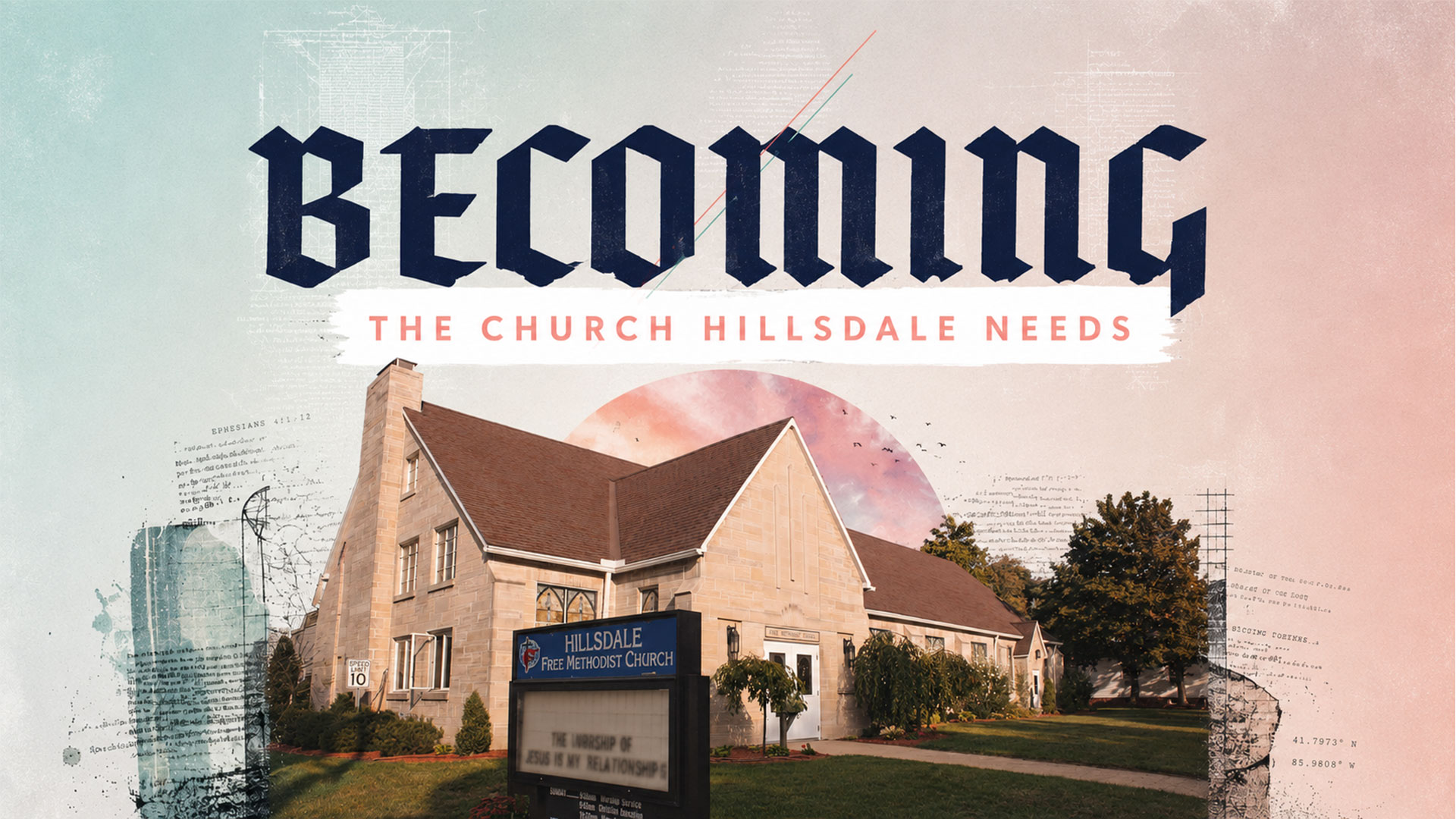
How should these realities impact us as we strive to be the church Hillsdale needs?
- We must be relentless in pursuing the purpose and mission we’ve been given.
(Mark 16:15; Luke 19:10; John 20:21; Acts 1:8; 1 Cor. 9:22-23; Col. 1:28-29; 2 Tim. 4:1-5)
The church is not incidental to the great cosmic struggle for the hearts and souls of modern men and women. It is the instrument God has chosen for that battle—a battle we are called to by virtue of being members of His body. (Charles Colson, The Body, 32)
Who you say Jesus is will determine everything about how you follow Him. (David Platt, Exalting Jesus in Matthew, 245)
Being a part of the church is not simply like joining a club; it is an extremely important confession with eternal ramifications. And these ramifications are not only for being a part of the church, but also for what we do as a church—we speak with the authority of Christ. (David Platt, Exalting Jesus in Matthew, 247)
- We must demonstrate utmost reliance on God to do what only He can do.
(Ps. 127:1; John 15:5; Rom. 8:26-27; 1 Cor. 3:6-7; 2 Cor. 12:9-10; Eph. 3:20-21; James 1:5)
The invisible church refers to those persons who are truly redeemed, truly regenerate and spiritually united with Christ. The invisible church is distinguished from the visible church because no man can read another person’s heart. We look on the outward appearance, but God alone can read the heart. (R.C. Sproul, The Purpose of God, An Exposition of Ephesians, 88)
- We must release any fear that might hinder us from living out our purpose.
(Josh. 1:9; Matt. 10:28-31; John 14:27; Acts 4:18-20; Rom. 8:15; 2 Tim. 1:7; Heb. 13:5-6)
Every local church that preaches the true gospel is a part of the most dynamic movement the world will ever know. By the power of God working in the hearts of men, the lowly are great, the weak are mighty, and the mustard seed of faith topples a mountain (Matt. 17:20). The local church is not he B-team – it is ground zero for God’s kingdom work. (Owen Strachan, Don’t Call it a Comeback, 114)
Gospel Connection:
Our mission rests on Christ’s victory. Because sin, death, and hell have been conquered, we have been called to faithfully proclaim what Christ has accomplished with confidence and hope.
(John 11:25-26; Acts 2:22-36; Rom. 1:4; Rom. 8:37-39; 1 Cor. 15:54-58; Col. 2:13-15)
To save us completely Christ must reverse the bent of our nature; He must plant a new principle within us so that our subsequent conduct will spring out of a desire to promote the honor of God and the good of our fellow men. The old self-sins must die, and the only instrument by which they can be slain is the cross. (A. W. Tozer, The Knowledge of the Holy, 31)
Spiritual Challenge Questions…
Reflect on these questions during your time with the Lord this week, or discuss with your friends, family, or Life Group.
- Why is a right understanding of Jesus essential to the church’s identity and mission?
- Peter confessed that Jesus is “the Messiah, the Son of the living God.” How should that truth shape the priorities, message, and activities of a local church?
- Jesus said Peter’s confession was revealed by the Father. How have you personally experienced God opening your eyes to spiritual truth?
- Jesus promised, “I will build my church.” How does that promise challenge the way we think about success, growth, and ministry?
- Where do you most need to rely on God rather than your own abilities, experience, resources, or plans?
- What fears most often keep Christians from fully living out their calling? Which of those fears do you find most tempting personally?
The Nicene Creed
We believe in one God, the Father, the Almighty,
maker of heaven and earth,
of all that is, seen and unseen.
We believe in one Lord, Jesus Christ,
the only Son of God,
eternally begotten of the Father,
God from God, Light from Light,
true God from true God,
begotten, not made,
of one Being with the Father;
through him all things were made.
For us and for our salvation he came down from heaven,
was incarnate from the Holy Spirit and the Virgin Mary
and was made man.
For our sake he was crucified under Pontius Pilate;
he suffered death and was buried.
On the third day he rose again
in accordance with the Scriptures;
he ascended into heaven
and is seated at the right hand of the Father.
He will come again in glory to judge the living and the dead,
and his kingdom will have no end.
We believe in the Holy Spirit,
the Lord, the giver of life,
who proceeds from the Father and the Son,
who with the Father and the Son is worshipped and glorified,
who has spoken through the prophets.
We believe in one holy catholic* and apostolic Church.
We acknowledge one baptism for the forgiveness of sins.
We look for the resurrection of the dead,
and the life of the world to come.
Amen. *catholic merely meaning universal