
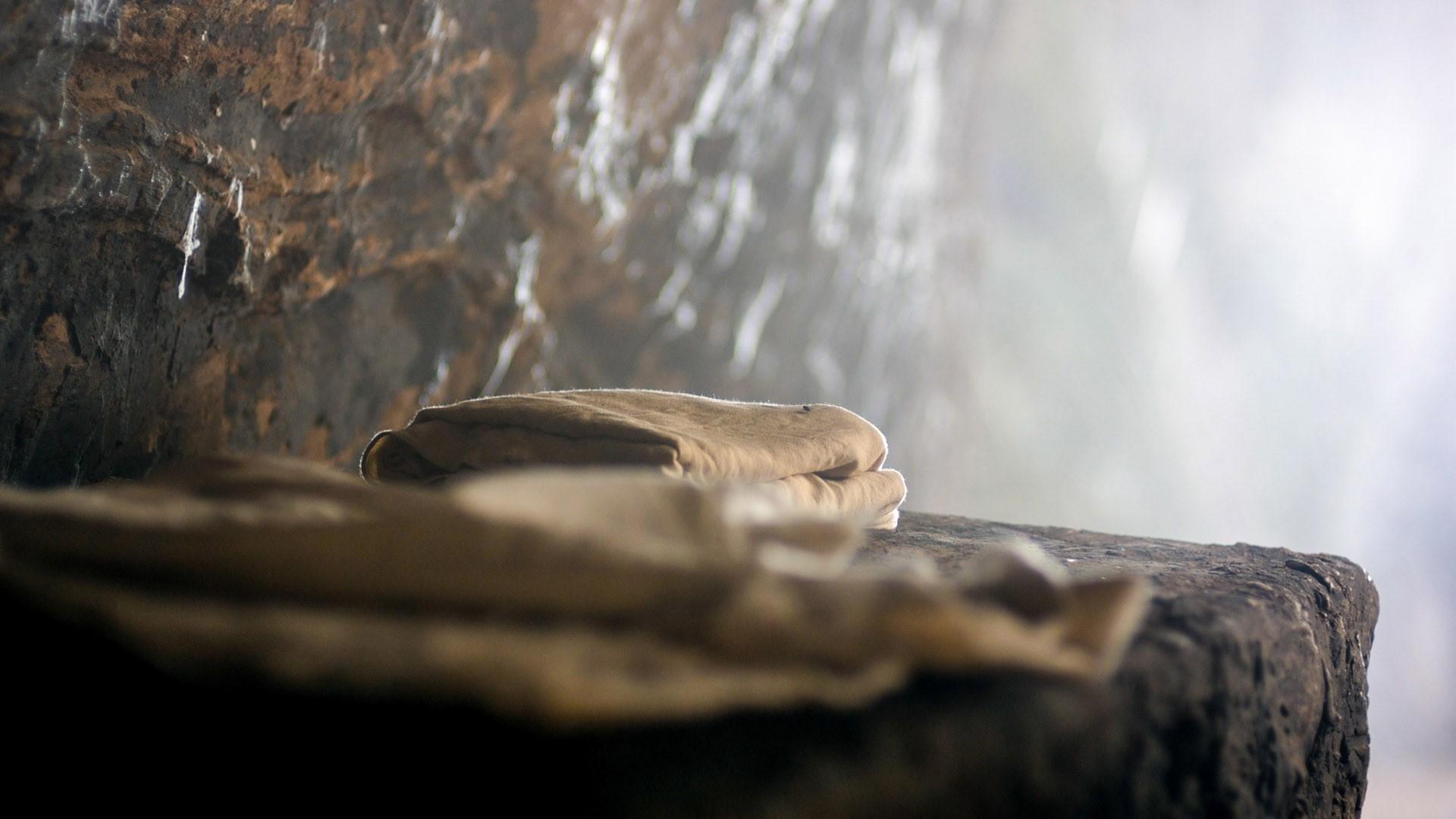
April 5, 2026 – Easter!
Matthew 28:5-6; Colossians 2:13–15
“Empty”
Service Overview: The resurrection of Jesus not only means the grave is empty, but the record is empty, and every power that stood against God’s people has been emptied of its authority.
Memory Verse for the Week:
Colossians 2:15 (NIV) “And having disarmed the powers and authorities, he made a public spectacle of them, triumphing over them by the cross.”
Background & Miscellaneous Insights:
- The ultimate demonstration of Christ’s power over death, and hence proof of His deity, was His resurrection. (John MacArthur, John 12-21, 368)
- The resurrection of Jesus Christ is the very heart-blood of the Christian faith. It is so important that someone has said, “We cannot make too much of the death of Christ, but we can make too little of the resurrection of Christ.” (J. Vernon McGee, Thru The Bible Commentary Series, John vol2, 325)
- A close study of the text nowhere suggests that the stone of the tomb was rolled away from the tomb to let Jesus out. The earthquake and rolling back of the stone recorded in Matthew (28:2) as a sign of a wonderful event, not as the event itself. There can be only one conclusion: the body of Jesus was gone before the stone was rolled away. It did not need to be removed for Him to escape the tomb; He had already escaped it. The removal of the stone was for the disciples, not for Jesus. (George Eldon Ladd, A Theology of the New Testament, 361)
- The word for wiping out is the Greek verb exaleiphein. To understand that word is to understand the amazing mercy of God. The substance on which ancient documents were written was either papyrus, a kind of paper made of the pith of the bulrush, or vellum, a substance made of the skins of animals. Both were fairly expensive and certainly could not be wasted. Ancient ink had no acid in it; it lay on the surface of the paper and did not, as modern ink usually does, bite into it. Sometimes a scribe, to save paper, used papyrus or vellum that had already been written upon. When he did that, he took a sponge and wiped the writing out. Because it was only on the surface of the paper, the ink could be wiped out as if it had never been. God, in his amazing mercy, banished the record of our sins so completely that it was as if it had never been; not a trace remained. (William Barclay, Philippians, Colossians, and Thessalonians, 142)
- (v. 14) The word for [certificate of debt] is cheirographon. It literally means an autograph; but its technical meaning—a meaning which everyone would understand—was a note of hand signed by a debtor acknowledging his indebtedness. It was almost exactly what we call an I.O.U. (William Barclay, Philippians, Colossians, and Thessalonians, 141)
- Although the exact meaning of Paul’s phrases cannot be traced with certainty, it is clear that his main point is to emphasize the decisive and complete way Christ’s death on the cross took care of humankind’s indebtedness to God. (Arthur G. Patzia, Ephesians, Colossians, Philemon, 59)
Because the tomb is empty…
…our death can be replaced with life.
(v. 13 cf. Gen 2:17; Deut 30:19; Ps 16:10; Ezek 37:5; John 5:24; 11:25–26; Rom 6:4; 6:9–11; Eph 2:4–5; Col 2:13)
The work of Christ is a work of power, because it put life into dead men; it is a work of grace, because it reached out to those who had no reason to expect the benefits of God. (William Barclay, Philippians, Colossians, and Thessalonians, 141)
To defeat death, God made us alive; to deliver us from sin, he made us alive with Christ. Because God raised Christ, those who belong to Christ are raised as well. (Bruce B. Barton, Life Application Bible Commentary: Philippians, Colossians, Philemon, 193)
- …our record of sin can be erased.
(v. 13-14 cf. Ps 32:1–2; 103:12; Isa 1:18; 43:25; Jer 31:34; Mic 7:18–19; Acts 3:19; Rom 5:1; Eph 1:7)
The resurrection is an essential part of the gospel message (1 Cor. 15:1–8) and a key doctrine in the Christian faith. It proves that Jesus Christ is the Son of God (Acts 2:32–36; Rom. 1:4) and that His atoning work on the cross has been completed and is effective (Rom. 4:24–25). The empty cross and the empty tomb are God’s “receipts” telling us that the debt has been paid. (Warren Wiersbe, The Wiersbe Bible Commentary: New Testament, 309)
Christ exhausted the cup of God’s wrath. For all who trust in Him there is nothing more in the cup. It is empty. (Jerry Bridges, The Gospel for Real Life, 57)
The bond of which Paul writes is an acknowledgement of debt in the debtor’s handwriting. It was legally binding. The idea of nailing it to the cross vividly brings out the nature of forgiveness. It is as if the cross declares ‘no more debts’. (Donald Guthrie, Exploring God’s Word: Ephesians, Philippians, and Colossians, 195)
- …our enemy’s authority can be stripped away.
(v. 15 cf. Gen 3:15; Luke 10:18–19; John 12:31; 16:11; Rom 16:20; Heb 2:14–15; Rev 20:10)
Calvary may have been man’s last word, but the empty tomb was God’s last word. (Warren Wiersbe, The Wiersbe Bible Commentary, 330)
The word for “disarmed” is literally “stripped,” as in stripping a defeated enemy of armor on the battlefield. The powers and authorities of this evil world stripped Christ of his clothing and popularity, made a public spectacle of him on the cross, and triumphed over him by putting him to death. Ironically, the victory belonged to Christ. Actually he stripped the evil powers of their hold on the world, held them up to public contempt, and triumphed over them by taking his rightful power and position. (Bruce B. Barton, Philippians, Colossians, Philemon, 195)
So… What is to be done in light of the empty tomb?
- Receive Christ’s victory for you.
(Matt 11:28; John 1:12; 3:16; Acts 16:31; Rom 10:9–10; 1 Cor 15:57; 2 Cor 5:21; Eph 2:8–9; Rev 22:17)
Faith brings a man empty to God, that he may be filled with the blessings of Christ. (John Calvin, Commentary on Galatians and Ephesians, 151)
When it comes to being justified, faith plus anything else is quicksand. The only ground for right standing before God is Christ Jesus grabbed ahold of by faith. (Jay Harvey, Don’t Call it a Comeback, 101)
Indeed this is one of the greatest mysteries in the world – namely, that a righteousness that resides with a Person in heaven should justify me, a sinner on earth. (John Bunyan, A Puritan Golden Treasury, 121)
If Jesus rose from the dead, then you have to accept all he said; if he didn’t rise from the dead, then why worry about any of what he said? The issue on which everything hangs is not whether or not you like his teaching but whether or not he rose from the dead. That is how the first hearers felt who heard reports of the resurrection. They knew that if it was true it meant we can’t live our lives any way we want. It also meant we don’t have to be afraid of anything, not Roman swords, not cancer, nothing. If Jesus rose from the dead, it changes everything. (Timothy Keller, The Reason for God, 210)
- Rest in Christ’s victory for you.
(Ps 62:1–2; Isa 26:3; 30:15; Matt 11:28–30; John 19:30; Rom 5:1; 8:1; Heb 4:9–10; 10:14; 1 Pet 5:7)
The Christian life is not about all the things we do for God—it’s about being loved by Him, loving Him in return, and walking in intimate union and communion with Him. (Nancy Leigh DeMoss, A Place of Quiet Rest, 43)
The lives of Christians today demonstrate that the resurrection is still changing people. It changes fear into love, despair into joy. The resurrection changes people from being spiritually dead to being alive to God. It changes guilty condemnation into a celebration of forgiveness and freedom. It changes anxiety into a hope that goes beyond the grave. It can change our sinful hearts so they want to follow the Lord Jesus, and the power of the resurrection is relentlessly killing sin in every true Christian. (Adrian Warnock, Raised With Christ, 13)
Let us keep in mind that God wants and expects us to be conquerors over the powers of darkness, not only for the sake of personal victory and for the liberation of other souls from the chains of Satan (though this is very important) but for His glory, so that His triumph and victory over His enemies may be demonstrated! (Corrie ten Boom, Defeated Enemies, 7)
Gospel Connection:
The tomb is empty… so we come empty-handed, and leave fully forgiven, fully alive, and fully accepted in Christ.
(Isa 53:5–6; John 6:35; Rom 3:23–24; 5:8; 8:1; 2 Cor 5:17; Phil 3:9; Col 1:13–14)
As we come to Christ, then, empty-handed, claiming no merit of our own, but clinging by faith to His blood and righteousness, we are justified. We pass immediately from a state of condemnation and spiritual death to a state of pardon, acceptance, and the sure hope of eternal life. Our sins are blotted out, and we are “clothed” with the righteousness of Jesus Christ. In our standing before God, we will never be more righteous, even in heaven, than we were the day we trusted Christ, or we are now. Obviously in our daily experience we fall far short of the perfect righteousness God requires. But because He has imputed to us the perfect righteousness of His Son, He now sees us as being just as righteous as Christ Himself. (Jerry Bridges, The Gospel for Real Life, 107)
Spiritual Challenge Questions…
Reflect on these questions during your time with the Lord this week, or discuss with your friends, family, or Life Group.
- When you hear the phrase “the tomb is empty,” what does that personally mean to you?
- According to Colossians 2:13, what does it mean that we were “dead” and then “made alive with Christ”?
- What are some ways people try to deal with their sin or guilt apart from Christ? How does the gospel offer something different?
- Colossians 2:14 says our “record of debt” has been canceled. What would it look like to truly believe your sin has been erased?
- Why do you think it can be hard for people to rest in Christ’s finished work, even after they believe? What are some practical ways we can “rest in Christ’s victory” in everyday life?
- What does it look like in everyday life to live out Christ’s victory in you?
HFM @ Home
Discipleship resources from the Free Methodist and Heidelberg Catechisms, offering historic, Scripture-based teaching to help us grow in our shared faith.
From The Heidelberg Catechism
Q55. What do you understand by “the communion of saints”?
- First, that believers one and all, as members of this community, share in Christ and in all his treasures and gifts.1
Second, that each member should consider it a duty to use these gifts readily and joyfully for the service and enrichment of the other members.2
1 Rom. 8:32; 1 Cor. 6:17; 12:4-7, 12-13; 1 John 1:3. 2 Rom. 12:4-8; 1 Cor. 12:20-27; 13:1-7; Phil. 2:4-8
Q56. What do you believe concerning “the forgiveness of sins”?
- I believe that God, because of Christ’s satisfaction, will no longer remember any of my sins1or my sinful nature which I need to struggle against all my life.2
Rather, by grace God grants me the righteousness of Christ to free me forever from judgment.3
1 Ps. 103:3-4, 10, 12; Mic. 7:18-19; 2 Cor. 5:18-21; 1 John 1:7; 2:2. 2 Rom. 7:21-25. 3 John 3:17-18; Rom. 8:1-2
From The FREE METHODIST Catechism
The Marks of a Faithful Church
God brings His gospel to the world primarily through the ministry of the visible church. For this purpose, it is to be a congregation:
- of faithful persons – a congregation of those who obey the gospel170
- in which the pure Word of God is preached – a congregation where the Scriptures are accurately taught and explained171
- in which the sacraments are duly administered – a congregation that correctly offers the means of grace to needy sinners.172
170 Matthew 7:21-23; Romans 1:5; James 2:14-26. 171 Nehemiah 8:1-8; Luke 4:16-21; 24:27; Acts 6:2; 13:15-16; 1 Timothy 4:13-14; 2 Timothy 2:15. 172 Matthew 28:19; John 4:1-2; Luke 22:19; 1 Corinthians 11:24-25; 1 Peter 3:21-22.